About The Railway
The Abbey Light Railway was a half-mile long 2-foot gauge railway built in the 1980s and existed until 2012 near the ruins of Kirkstall Abbey in Leeds, Yorkshire, UK. The driving force was it’s owner Peter Lowe, along with a group of family and friends volunteering to help build and operate it. Click on the + beside the headings below to read more about this small part of Leeds’ rich railway history.
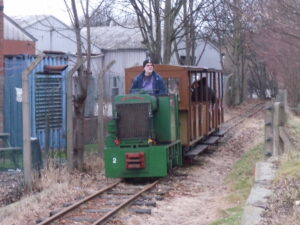
Peter Lowe was an engineer and lecturer at Kitson College in Leeds. In his spare time he founded the Abbey Light Railway, built the railway and acquired a collection of locomotives and rolling stock to run on it. The first, No.1 ‘Loweco’, was restored in his garage at his home in Horsforth, Leeds, before the railway existed. With very rare exceptions, Peter was at the railway whenever it was open, as keyholder, chief engineer and occasional driver. Jean, his wife, had the role of passenger train guard and their sons Craig and Gavin and grandsons Adam and Ryan were also regular helpers.
The Lowe family was helped by a band of dedicated volunteers to build, operate and maintain the railway.

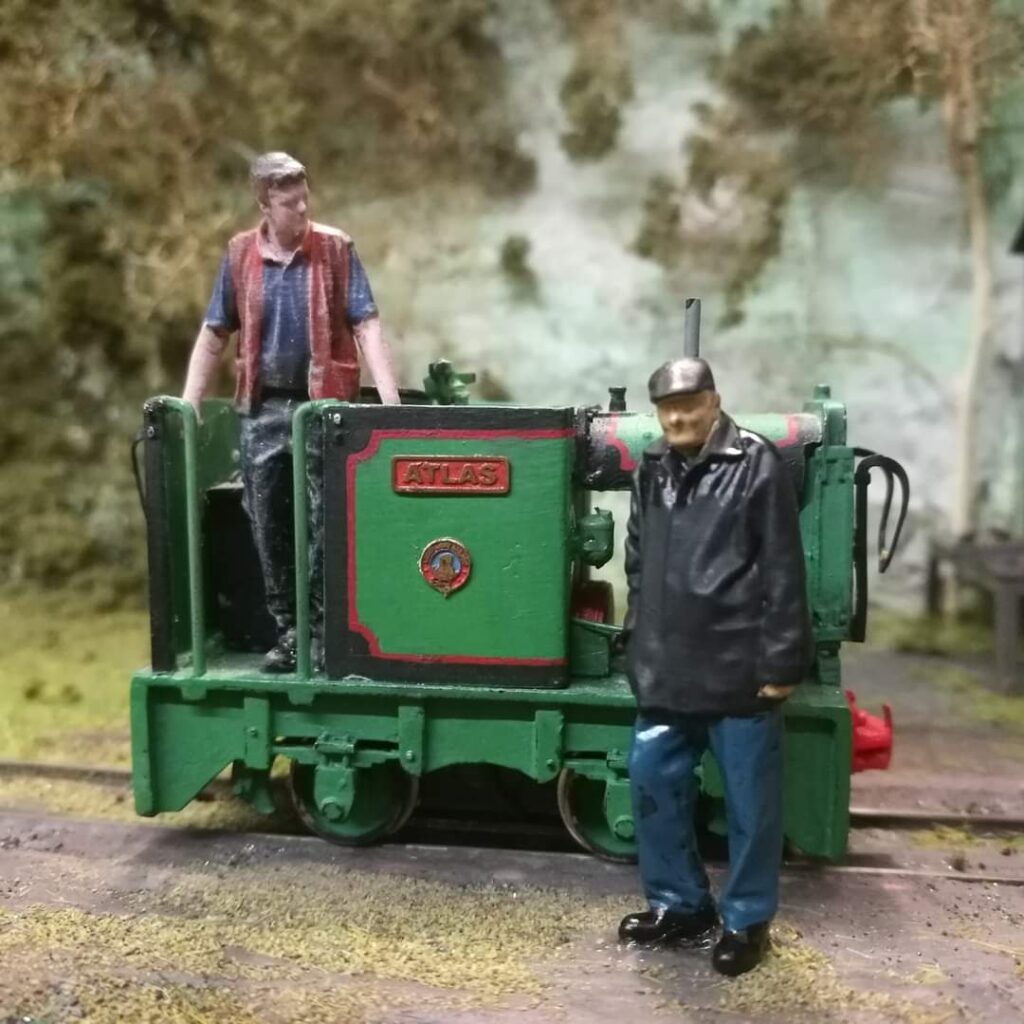
The railway was built on Leeds City Council land as an extra attraction to visitors of the parkland surrounding Kirkstall Abbey. Once the route was completed and passenger services established more locomotives were acquired. See individual loco histories in the ‘Meet The Fleet’ section for condition on arrival. Some arrived fully working, others were restored from scrapyard wrecks or an incomplete kit of parts. Over the subsequent years the focus shifted from developing the railway further towards restoring each loco in the fleet to working condition and staying on top of maintenance on the existing railway and fleet.
The operating base of the railway was on Bridge Road in Kirkstall, Leeds, West Yorkshire, UK. When built it was beside a warehouse, which became Clover department store, then Allders and finally British Home Stores. After closure of the railway in 2013 the site has been redeveloped into a complex of shops, although the site of the railway remains untouched but lost in the undergrowth. There is a sign placed in the new development that honours the railway, which is a nice touch by the developers. Road access to the sheds was by a track leading from Bridge Road along the side of the millrace, an artificial diversion from the River Aire designed to feed water to the mills in the industrial revolution. The track led to a house at the sluice gates that fed the mill race that once housed their keeper. On the opposite side of the mill race to the sluice gate keeper’s house was the Abbey end terminus of the railway, which was on a shelf built out from the hillside. The railway is shown on Railmap online (www.railmaponline.com), under the heading ‘fun and miniature’.
A trip up the line starts at Bridge Road station. The station is a run-round loop with a siding leading into the big shed. It is bordered by the end of the sheds, the chain link fence to Clover/Allders/BHS car park, Bridge road itself, a WW1 cenotaph on the roadside and the road access track, which is behind a row of trees. Beyond that is the millrace. Originally the platform was loose gravel, but was overgrown with grass for most of the life of the railway.
From here, a passenger train leaves the right hand side of the loop, around a corner and into the compound. This was the area between the side of the sheds and the chain link fence bordering the car park. It had gates on each end and was used to store various bulky items that wouldn’t fit in the shed. For many years this included the rusty hulks of locos No.9 and 10, and the Fordson tractor that was eventually restored and became part of loco No.8. It also stored bits of spare rail, sleepers and various wagons off the track. The working wagons ard for a time the rolling chassis of loco No.10 (when it would roll) were stored on the track and had to be shunted out of the way before passenger trains could start, and shunted back at the end of the day.
Beyond the compound was the yard. The original little shed was beside the compound and the later big shed beside it with their doors facing the yard. The two sheds each had two roads leading into them connected by a point each. There was a crossover onto the main running line on the little shed side, and the two sheds were connected by a Kerr Stuart wagon turntable. Moving things from one shed to another involved either going through the shed and the compound via the main running line, or by use of the turntable in the yard. The turntable also had a siding off it going beside a loading ramp that marked the end of the yard, and up onto another loading ramp parallel to the border fence.
Exiting the yard, the railway carried on in a straight line, parallel to the fence to the car park on the left, a wildflower meadow on the right, the access road to the sluice gate house (doubling as a footpath) beyond that and the mill race beyond that. The line then takes a gentle curve to the right, still following the car park fence to the left but now under trees with woodland on the right until it meets the access road to the sluice gate house at 90 degrees. There is a gated level crossing with the road here. The gate was bolted open while trains were not running, but unbolted and closed across the road during operation. Immediately after the crossing was the bridge over the millrace. This is described in more detail in the ‘infrastructure’ section below.
Now on the other side of the millrace, the line enters a cutting, curving to the left and climbing. This curve, under the trees, was the most challenging part of the route and more than once caused some delay in wet weather. The line then straightened again and continued level through the woods, again parallel to the millrace until the Abbey end terminus.
The Abbey station was on a shelf built out from the hillside. It consisted of just a run round loop with the right hand side a gravel waiting area and bench. The end of the headshunt was level with the sluice gate for the Mill Race, within sight of the Abbey.
Passenger trains operated on Sunday, Bank Holiday Mondays and the Saturday of the Kirkstall Festival in the Abbey grounds, from 1pm to 4pm. There was no timetable, trains would go as soon as there were some passengers aboard and run empty after about 20 minutes of waiting to see if anyone was waiting at the other end. On Kirkstall Gala day it was a more intensive service requiring a loco on each end for a quick turnaround. Tuesday evenings from about 8pm were also spent at the railway. It was a time to do some trackwork, continue work on the latest project, shunt stock around and check fuel levels etc. in readiness for next Sunday, or quite often just gather around the stove and put the world to rights.
The standard mode of operation was one of the air brake fitted locos pulling all three coaches, running round at each end to haul the coaches in both directions. The loco would be chosen by the driver, depending on personal preference or expected weather conditions and passenger numbers. At various times for ease of operation the passenger train was run with a loco on each end of the train, with the loco’s air brakes isolated on the rear loco. The usual locomotives for this way of running was No.3 ‘Odin’ on the uphill end, and No.6 ‘Druid’ on the downhill end.
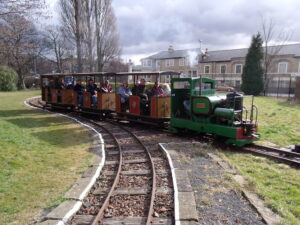
Occasionally the railway was opened up for enthusiast groups, and for a few years a ‘diesel gala’ was run on the weekend corresponding with the Narrow Gauge North model railway show nearby. During these events the aim was to give the visitors a ride behind as many locomotives as possible, as well as letting them have a drive or a cab ride of the other locos in the yard. The wagons were shunted into the shed out of the way, and all the locomotives were brought outside and started. Those with air brakes took turns on the passenger train, swapping over every time the train returned to Bridge Road. It was also a chance some of the locos without air brakes to haul a passenger train, with one of the air braked locos in the train but only idling to provide braking power. On occasion demonstration goods trains using the skip wagons were run between passenger turns.
The track was made up from rail that was acquired for the Ffestiniog Railway from an East Yorkshire brickworks but, after inspection, deemed too lightweight for FR use. It was spiked directly to wooden sleepers which were recovered from power station sidings south of Leeds and cut in half. Crushed brick was used for ballast. Whilst not an ideal material in terms of drainage ability, it was available cheaply as the biproduct of some local house demolition work and gave the trackbed a distinctive red appearance. The railway had a diesel-powered stone crusher mounted to a skip chassis (created in house) that was used to break bricks for this purpose. Points were acquired from the lifting of the internal railway at Knostrop sewage works in Leeds, and the layout of the railway was more-or less reliant on the number and orientation of the points that were acquired. Track maintenance extended to replacing rotten sleepers, when replacements were available. As the sleepers were acquired second hand to begin with, and the brick ballast wasn’t great at draining moisture away, there was quite a lot of rotten sleepers so priority was given to the worst of them.
Originally the railway was equipped with just the little shed. This was a 2-road wooden structure clad in corrugated iron. When No.4 ‘Vulcan’ arrived, it was too tall to fit through the doorway, so the ground was dug out and the track lowered about 6” on one road to allow it to fit under the doorway and roof supports. The rolling stock collection soon outgrew the original shed, so a larger all-steel structure was built alongside it. The big shed had the luxury of a concrete floor and space beside it’s two tracks for a collection of machine tools. In the front corner was a log burning stove, which was the only source of heating on site. The railway remained off-grid in terms of utilities. Electricity for the machine tools was provided by a diesel generator mounted on an ammunition wagon. The generator wagon used to live in the big shed and was shunted outside when in use, but later it was put in the little shed and it’s exhaust plumbed out of the roof. Water was collected from the roof in a large plastic tank in the compound and warmed on the stove for hand washing, when needed. There was no toilet or cooking facilities, aside from wandering over to one of the nearby supermarkets to use theirs.
Outside the sheds was a pair of loading ramps both used for loading rail vehicles on and off trailers or lorries. One ramp was originally positioned in line with the little shed but became unusable when the turntable and rail connections were installed. It was later rebuilt alongside the fence and connected to the turntable in the 1990’s. In the final few years of the railway the larger ramp was lowered to allow it to be used for loading locos onto trailers. The other ramp was a good vantage point for photography.
The bridge over the millrace is possibly the largest infrastructure project of the line. It’s abutments are made using gabion baskets filled with rocks, an unusual construction method that was tested in Peter’s garden. There were 4 large girders creating the span of the bridge and overall it was designed to carry a much heavier load than even the heaviest loco and trainload gave it. Originally it had wooden walkways each side and down the centre of the track with handrails. When these rotted it for a while it was just track the track on top of the bridge, and in later years the cross timbers were replaced by steel and it regained the handrails. The abutments are still in situ and one of the few remaining bits of evidence of the railway’s existence.
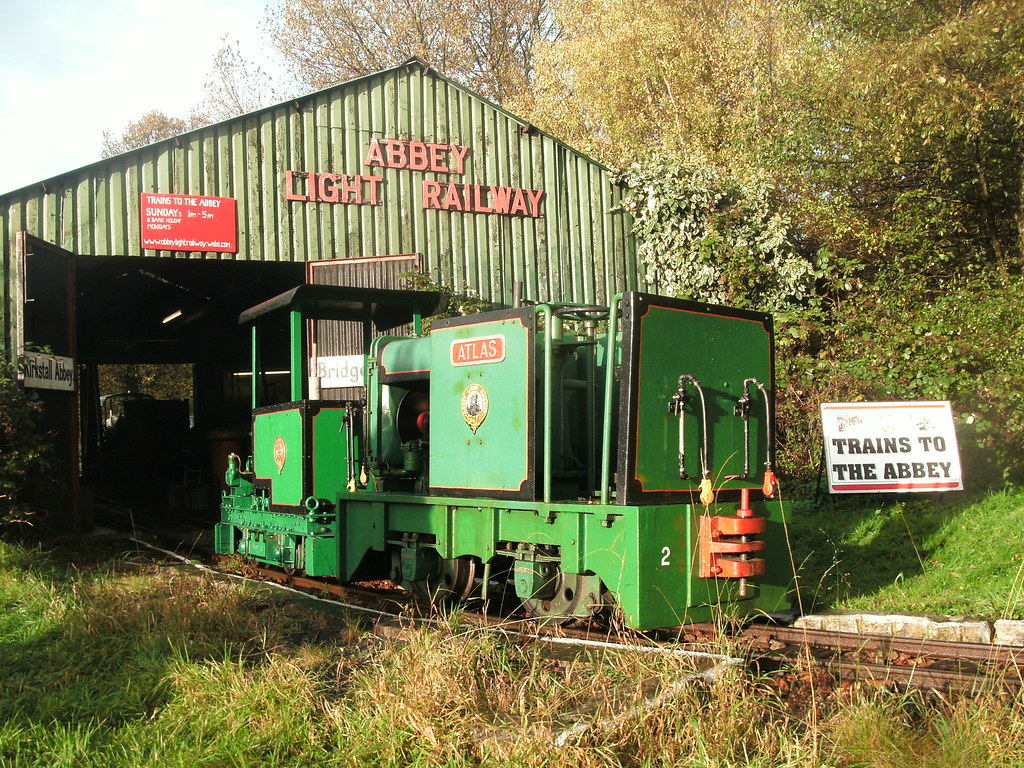
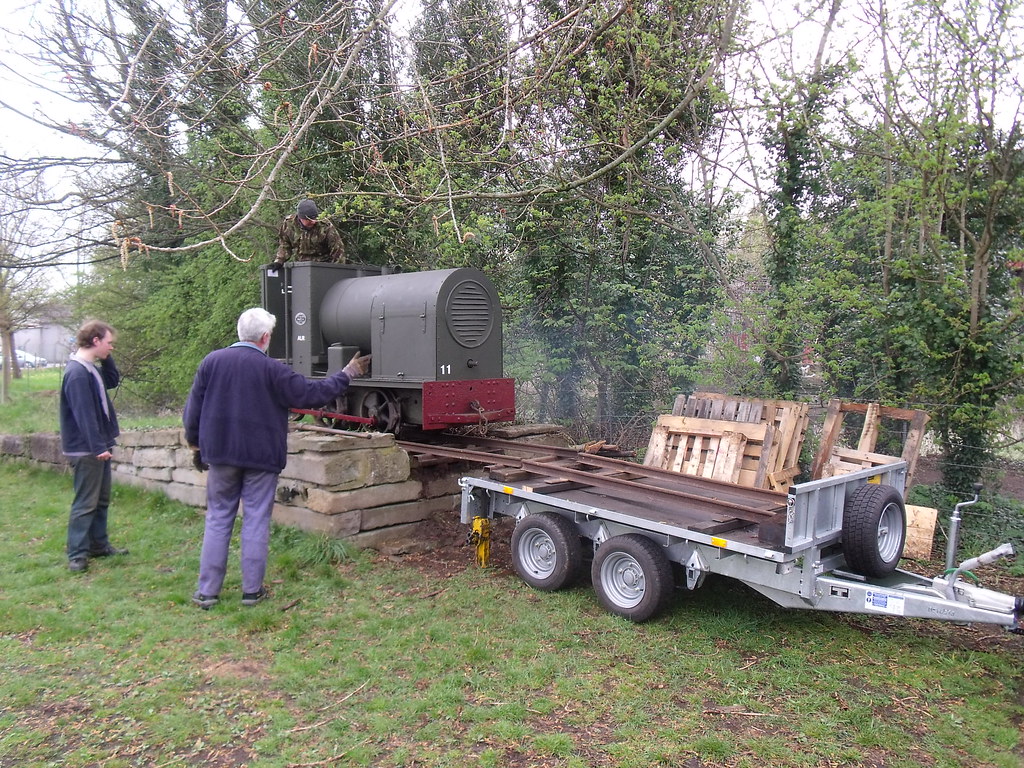
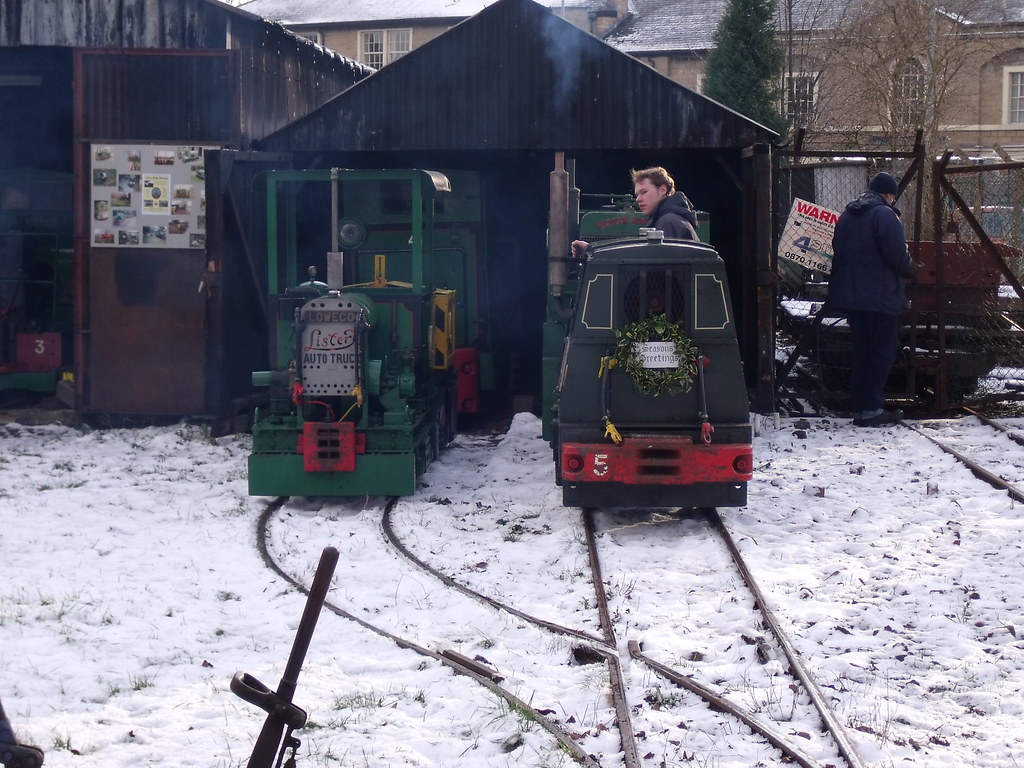
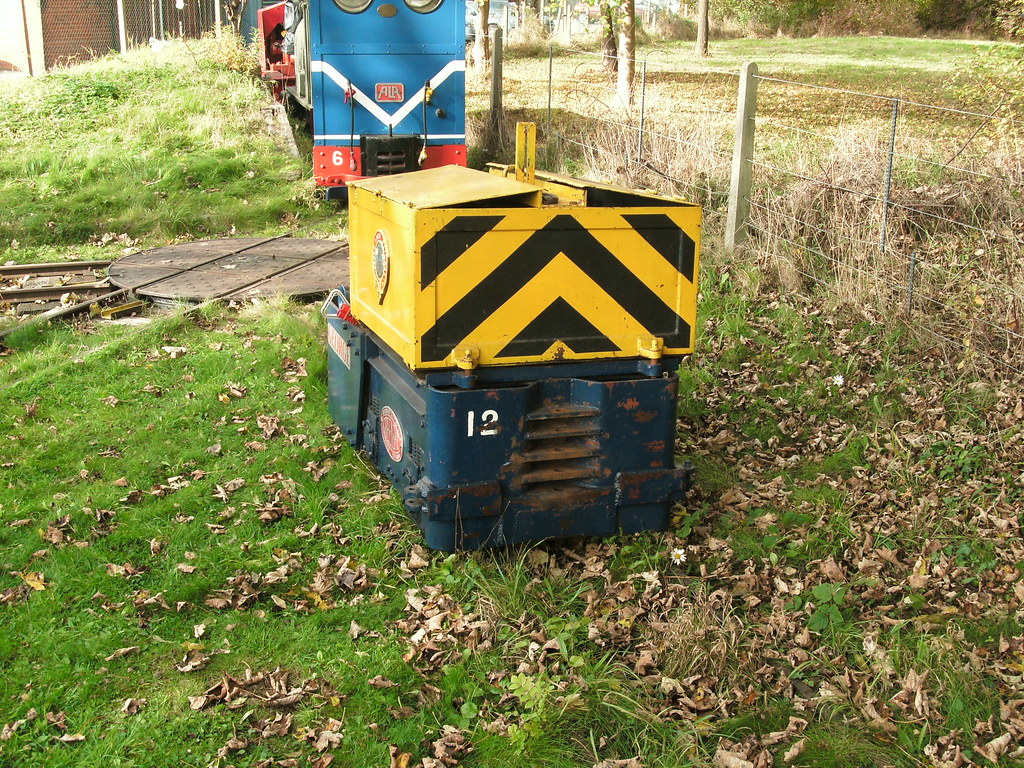
As well as the locomotives and rolling stock, the railway owned various other vintage machines that were used mainly during the construction of the railway.
The excavator was a Priestman Cub VI, acquired from a builder’s merchant near Huddersfield. The world had already moved on to more versatile hydraulic so there was only one driver left who could operate this vintage cable-operated machine. It was fitted with an arm for digging trenches with the bucket fixed solidly to the front part of the jib, while this arrangement was fine for general digging, it wasn’t very good for loading anything into wagons. It was used during the construction of the bridge, where it could lower the first girder into place between the abutments, but once the railway was complete it saw little use. It remained parked in various places around the yard, with the bodywork steadily rusting away until it was sold in August 1999. Its new owner has done a full restoration on it and it can now be found occasionally operating at Threlkeld mining museum in Cumbria.
The railway once owned a wheeled dumper truck that was used extensively in the construction of the railway, which was sold in the 1990’s. As well as the wheeled dumper truck, there was also a Ransomes MG crawler dumper truck. This was a variation of the classic Ransomes MG crawler tractor, but turned around so the engine was at the back, leaving room for a large dumper bucket at the front. This came out for an occasional play, but otherwise I didn’t see it do any work. It spent most of it’s time down at the end of the big shed and lasted there until circa 2010 when it was sold to make track space for Loco No.9, which was the next restoration on the cards when the railway closed.
The single most useful bit of kit at the railway was the crane wagon. This was an ex-RAF Fauld ammunition wagon built by Robert Hudson in Leeds, fitted with a manually powered hydraulic hoist towards the none-brake handle end of the wagon, and outriggers at the same end that could be deployed for heavy lifting. It was loaded with all kinds of heavy ‘junk’ including a Ford engine from a lorry, to give it enough weight to mostly negate the use of the outriggers. Through use of the crane wagon, bits of timber and steel tubes acting as rollers, there was nothing that couldn’t be moved! It was frequently used for lifting things around the yard, in and out of the compound, or around the workshop. It was usually paired with loco No.5, which was heavy and powerful enough to handle the heft of the wagon with ease, and could be driven with the precision required to put the crane hook in just the right position. Planning how to move something from X to Y, and how to get the crane wagon into position, took a good deal of planning and was good fun to carry out, sometimes in the dark on a Tuesday night!
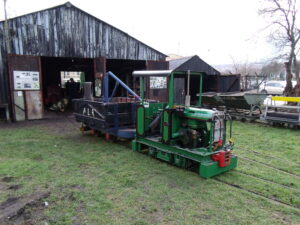
On two occasions Kerr Stuart ‘Wren’ 0-4-0st ‘Peter Pan’ visited the railway, once for the weekend of 13/14 June 1987 and the second for the weekend of 14/15 July 2001. These two occasions were the only time steam ran on the Abbey Light Railway. Both times it hauled passenger trains, top and tailing on the uphill end of the train. On the 1987 visit there was still only one coach and loco No.1 ‘Loweco’ was on the downhill end and providing the train brake air. By 2001 all three coaches were in service and No.6 ‘Druid’ was doing the honours. The 2001 visit was planned to coincide with the Kirkstall Festival, and although having a steam engine was an attraction, takings were down as the service was slower due to the need to water and oil the steam loco. Despite that, it was still the long term plan for Peter Lowe to build a new-build Kerr Stuart Wren. The frames and some castings were acquired for the project, but that’s as far as it went.
Peter Pan’s visits may have been the only time steam ran on the ALR, but it wasn’t the only time there was a steam engine present! The railway played host one evening in the 2000’s to the Leeds Traction Engine club. An intensive train service was run with all available locomotives, and the club brought a hog roast and a steam roller for the evening.
In the 1990’s the Hunslet Engine Company was still building locos in Leeds, and had built a batch of 2’ gauge diesel locos for export branded Hunslet-Jenbach. However, the deal fell through and in order to show one of the locos in operation to potential UK buyers, one was loaned to the Abbey Light Railway for a few weeks.
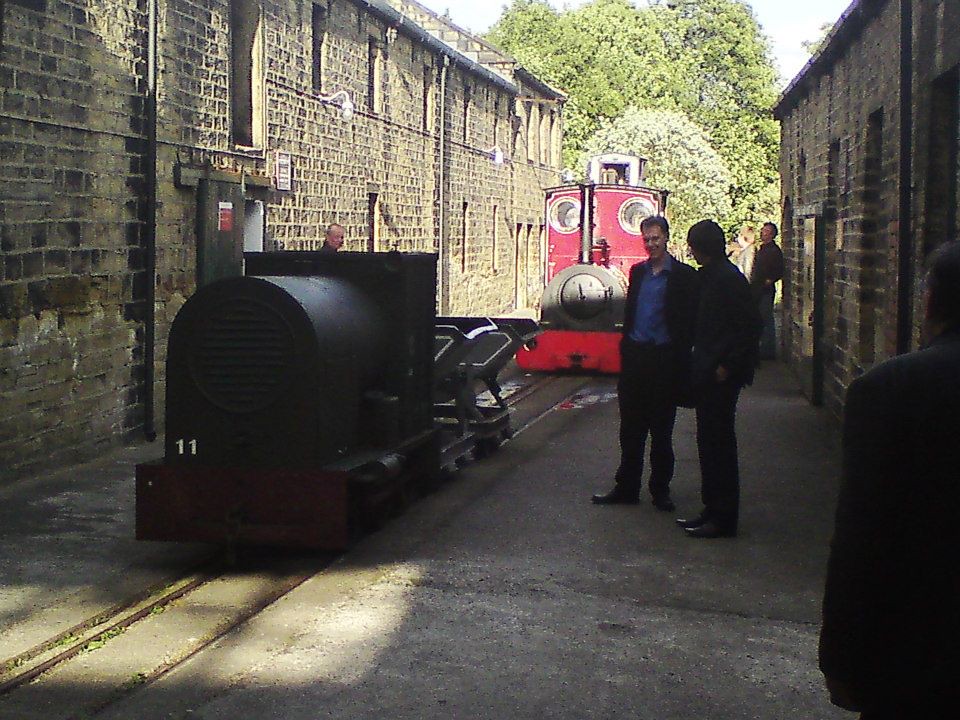
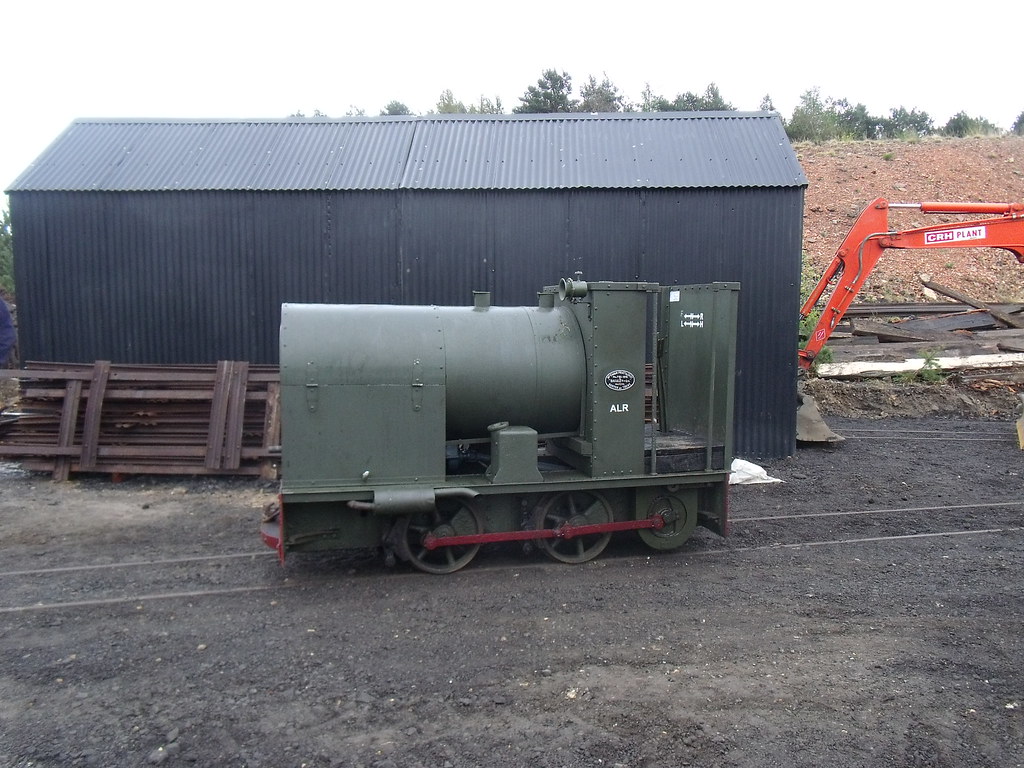
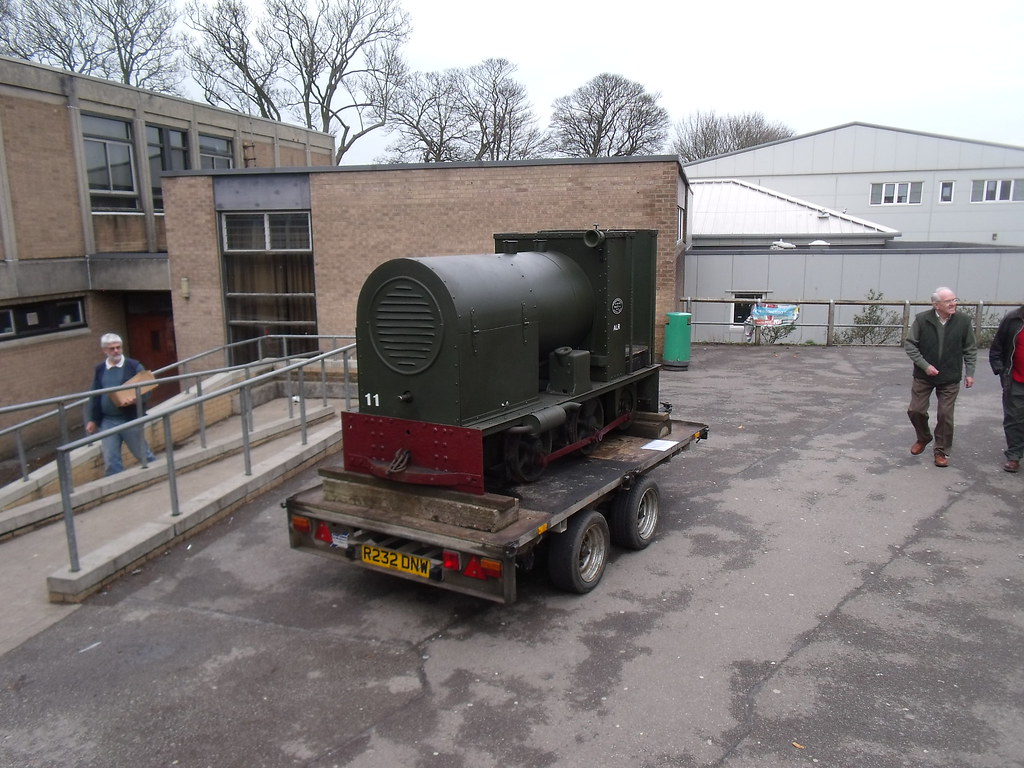
There was a short period in 2012 where the railway was closed as Peter had become unwell. During that time the railway opened once without him for a primary school class to visit. They had a ride on the line behind No.6 ‘Druid’ and a lucky few got to have a closely supervised drive of No.5 in the yard. Little did we know at the time, but this was the last time the Abbey Light Railway would operate for passengers. Peter passed away shortly after. His family inherited the railway, and although a plan was formulated by the regular volunteers to keep the railway running, there was a long list of reasons it couldn’t have continued without Peter. Further to that, we were aware that the passenger takings were nowhere near enough to cover the costs of running the railway, and Peter subsidised it considerably from his own pocket. Any continuation would have required longer opening hours and a more professional approach towards marketing to make it cover its costs. In the end that plan was dropped and the entire railway was sold to some members of the Welsh Highland Heritage Railway in Porthmadog, Wales. The WHHR members came in force to dismantle the railway, which they duly did during 2013. All of the locomotives and rolling stock except No.4 ‘Vulcan’ were initially taken back to the WHHR. No.4 was actually on permanent loan from Yorkshire Water. When they were told about it (for they had no record of this) they decided it should remain in Yorkshire and it was placed in the care of the narrow gauge group at the Embsay and Bolton Abbey railway, so was sent there. The WHHR have kept a few of the locos and the rest were sold on to other railways around the country. The track was lifted, the sheds emptied and dismantled and the only things remaining at the time of writing are the concrete floor from the big shed, the ramps and turntable pit lost in the undergrowth, platform edge stones and one bufferstop. The demise of any railway is a sad event, but as a volunteer this felt like the best outcome, knowing that it couldn’t have realistically continued without Peter (and would never have been the same without him) and all the things we put most effort into – the locomotives – have secure new homes. It left nothing but good memories, and for me, a desire to build a layout to remember it by.