Wagons
Ammunition wagons
Builder: Hudson
year built: 1940’s
Previous bases: RAF Fauld; (some) Ffestiniog Railway; Abbey Light Railway; Welsh Highland Heritage railway.
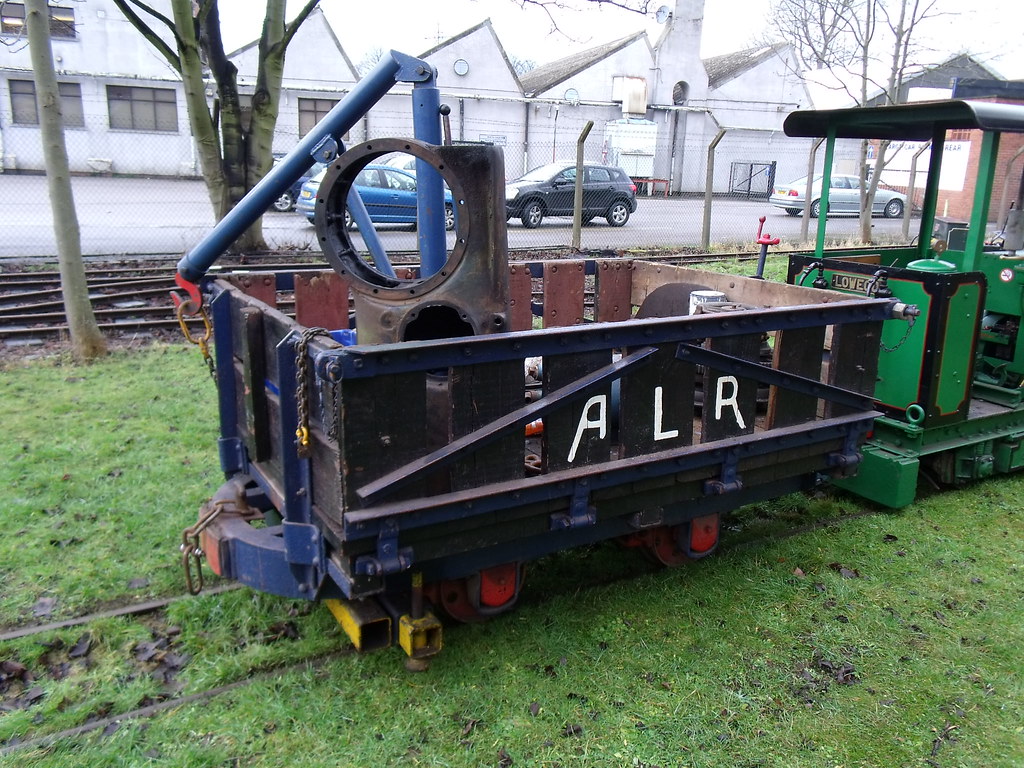
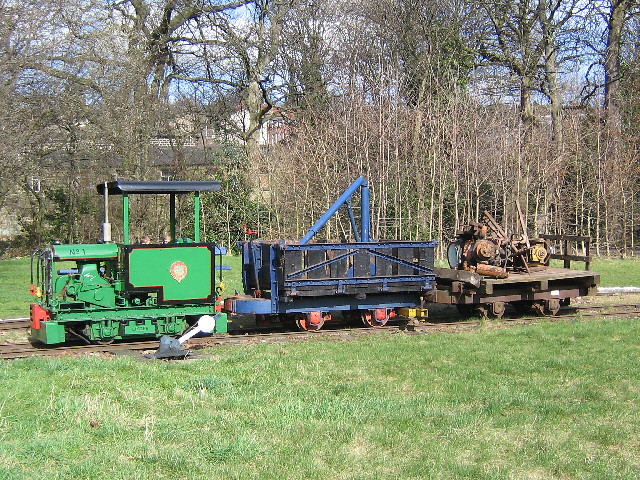
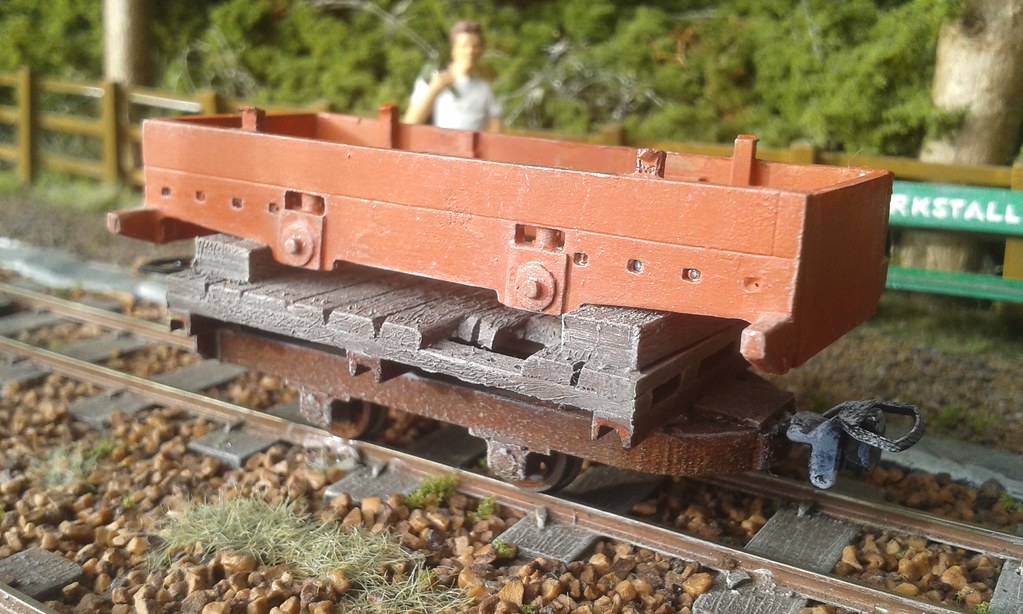
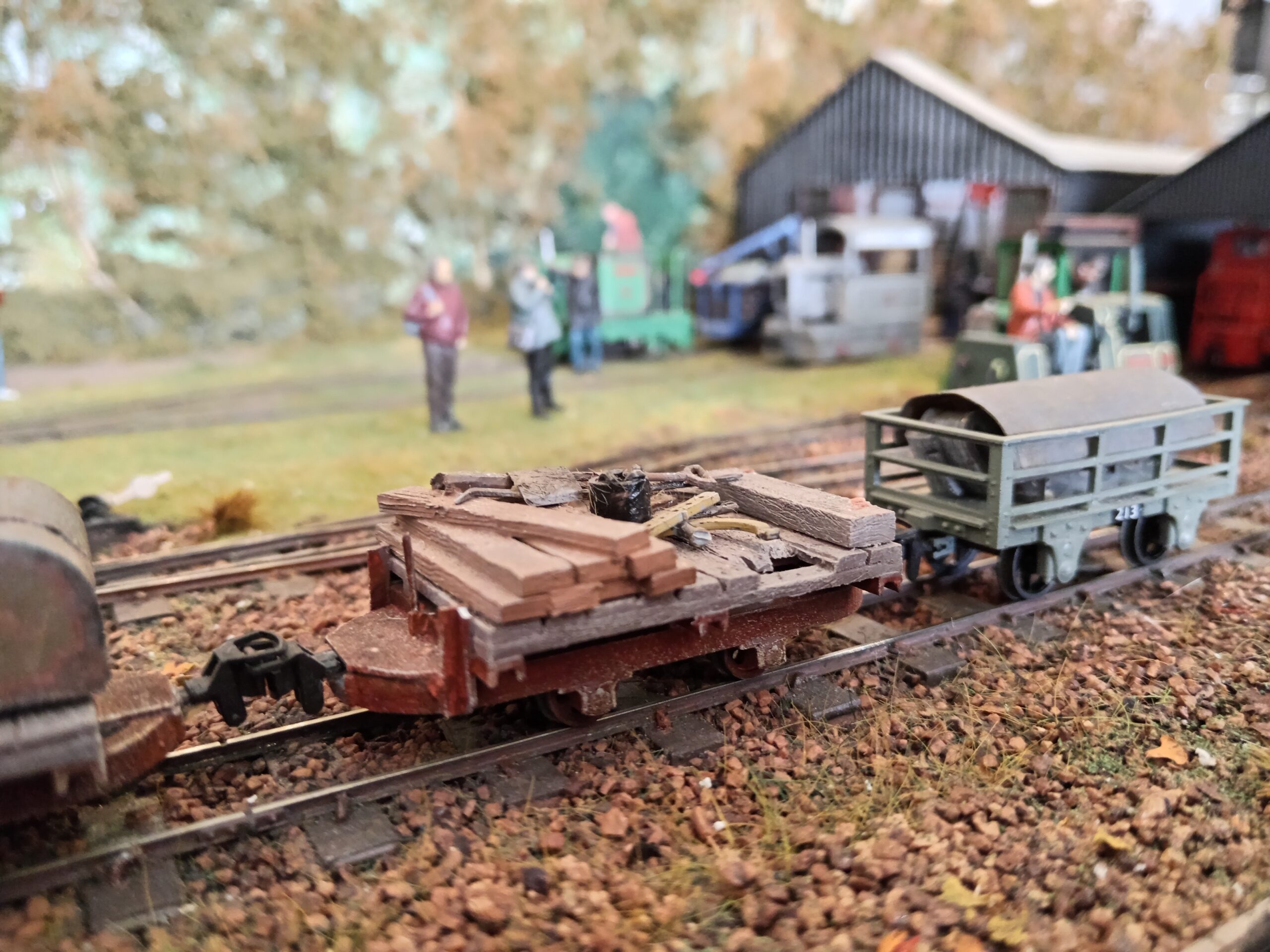
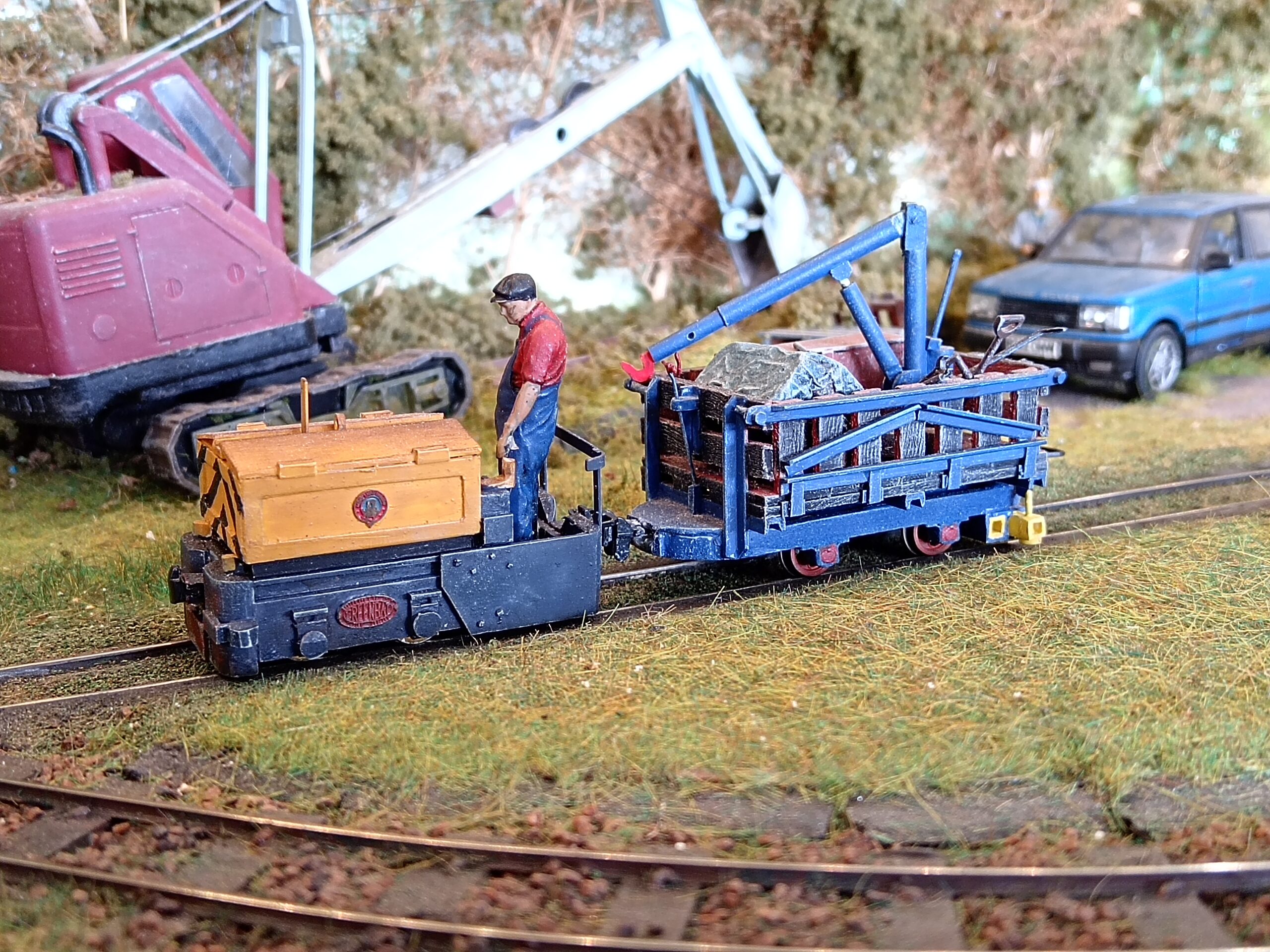
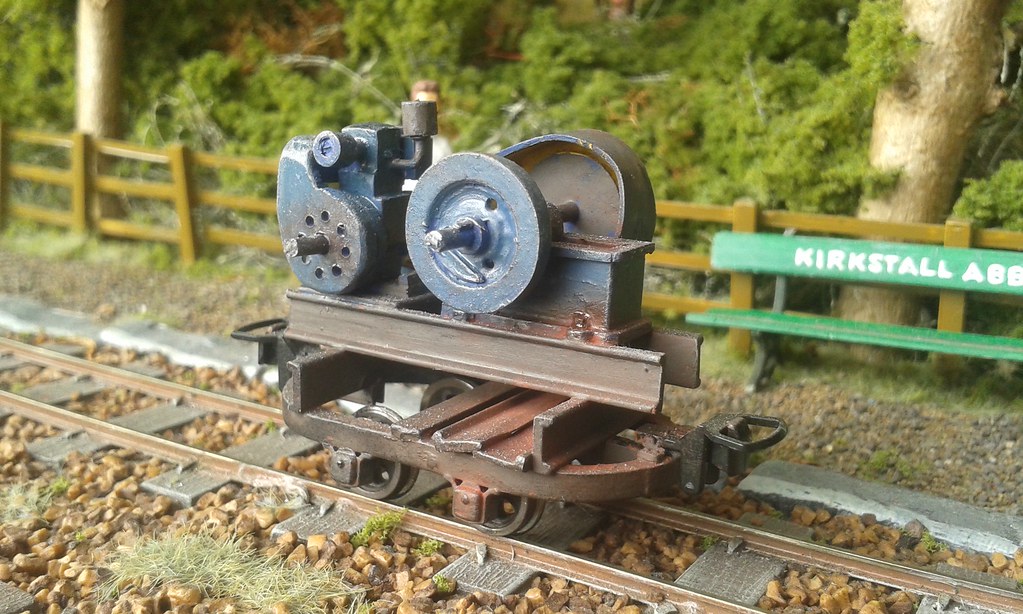
Notes on the prototype: 7 of these wagons were acquired from the sale of all rolling stock from the former ammunition base at RAF Fauld, some came to the ALR via the Ffestiniog railway and some were only bare chassis. Three of them were rebuilt into coaches, one without sides or ends had the big diesel generator used for powering the sheds and machine tools mounted on it, and the other three were retained as working wagons, with one of them later being adapted into the crane wagon. The remaining two had a hard life entirely outdoors being shunted in and out of the compound each week with very little maintenance. This took it’s toll the years as the wood rotted away and the rest because ever more rusty. One of them had it’s brake lever missing and was loaded for years with a steam winch from a ship (must have seemed like a good idea when it was acquired!) When the winch was sold and removed the wagon was loaded with the chassis of the Muir hill, which occupied it until the railway closed. The other one was loaded with various other scrap for years and then had it’s rotten deck replaced by a large pallet and was used to house the railway’s collection of good spare sleepers.
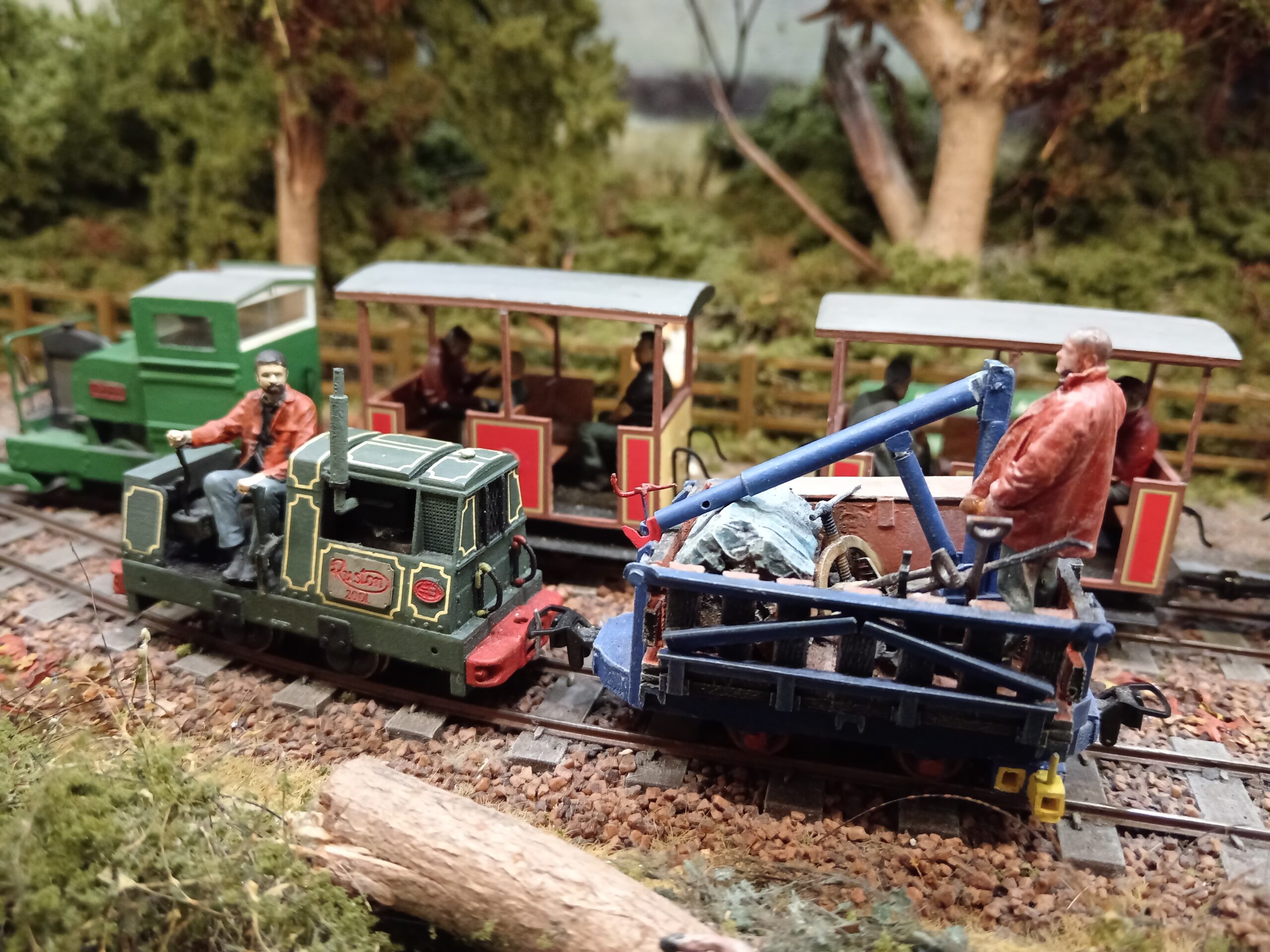
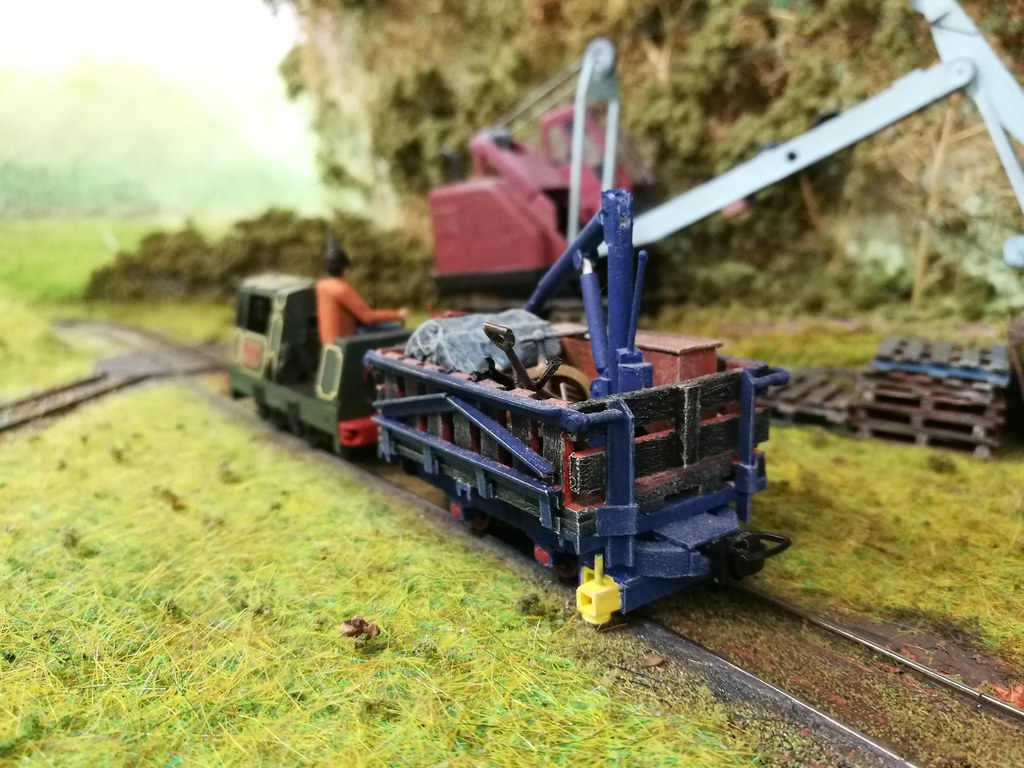
The crane wagon must have been the best of the 7, as it retained all it’s original woodwork. A heavy duty manually operated hydraulic engine hoist was fitted inside the wagon over the axle at the opposite end to the brake lever, along with telescopic screw-down outriggers at the same end. The original idea was that a load could be lifted up and slung into the wagon by opening the side. In reality, the wagon was loaded with all the heaviest things we could find (including the engine block for a Ford truck) to counterbalance the crane, and the outriggers were seldom used. Still, it was an incredibly useful vehicle that was responsible for moving anything heavy around the railway. I’m unsure what happened to the fauld wagons after the ALR closed, but I do know the crane wagon had it’s hoist and outriggers removed at the Welsh Highland Heritage railway, has had a coat of paint, and remains in their collection.
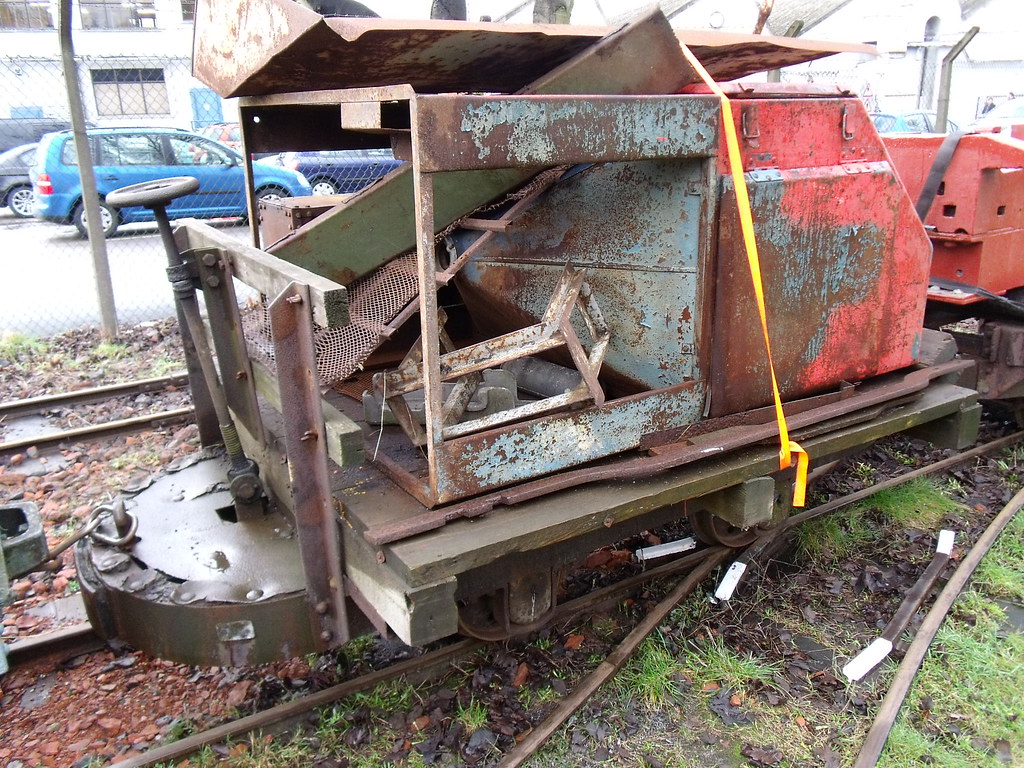
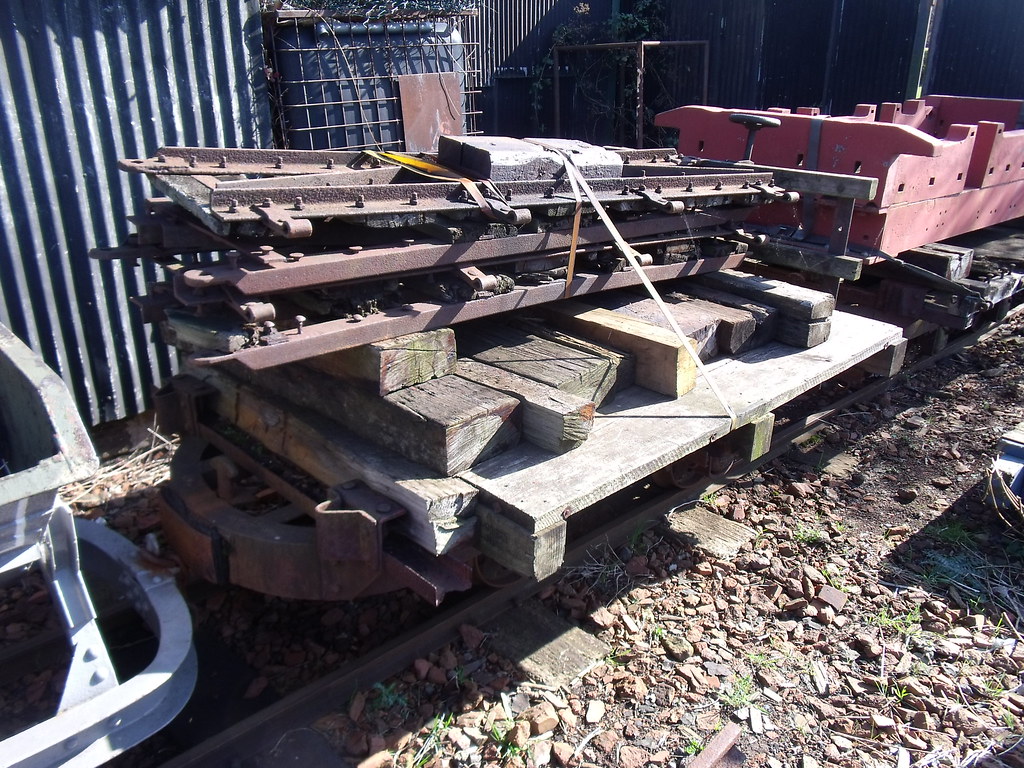
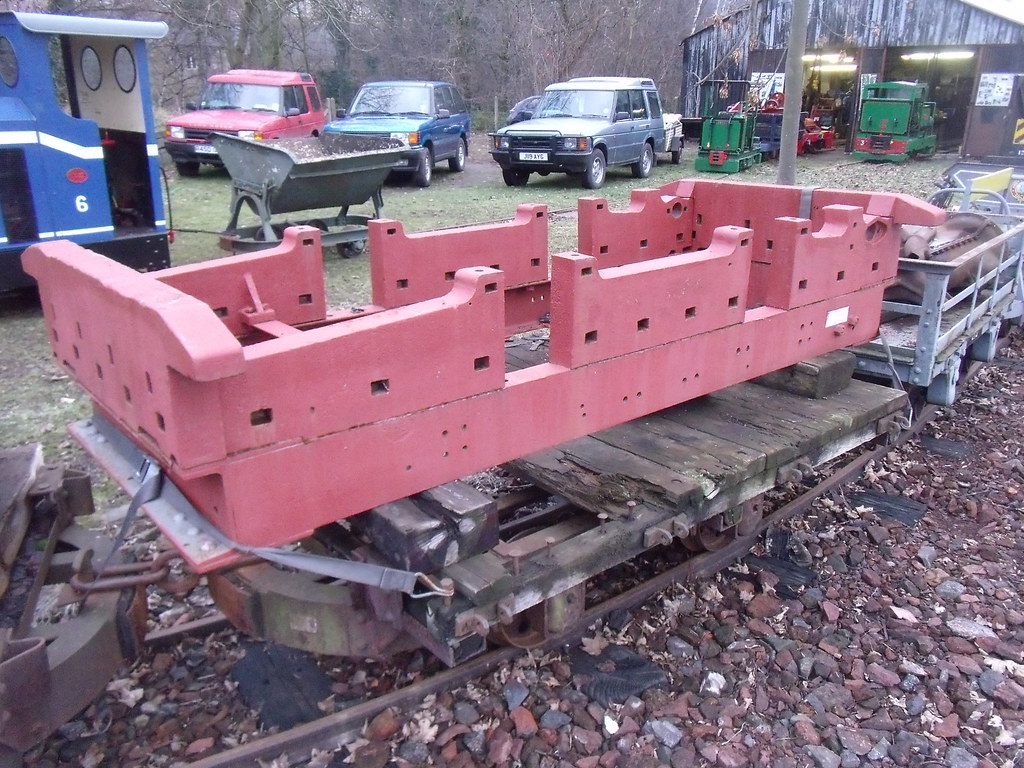
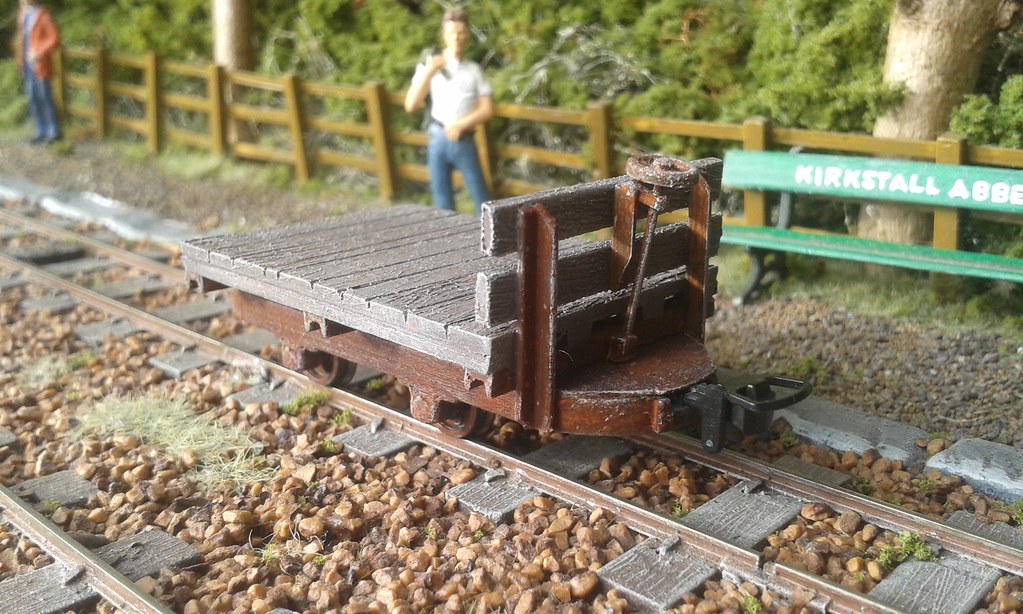
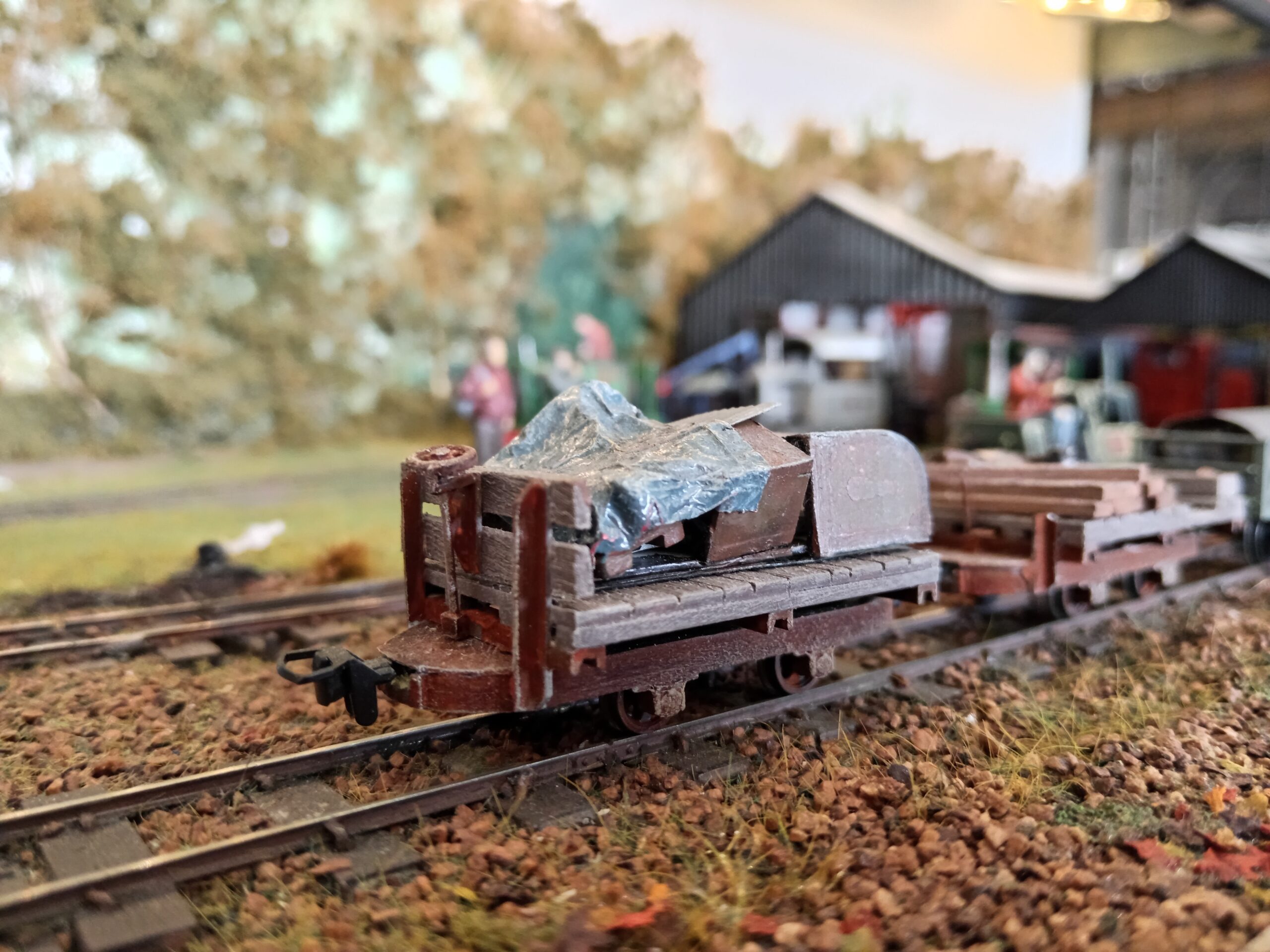
Notes on the model: All the fauld wagons and coaches use the same 3D printed chassis. Designed by myself to accommodate brass bearing cups and Kaydee couplings. The wagon bodies were scratch-built from plasticard and were some of the first items of rolling stock made for the layout. Originally my model of the Muir Hill was mounted on one of them and the other contained varios ‘scrap’ items. When the Muir Hill was relocated to the compound on the model I replaced it with a sleeper load on the wagon. The crane wagon also has a plasticard body, with a brass spiggot for the hoist to locate on. The hoist is made from various sizes of plastic tube and rod and can be posed in position. As per the prototype, the wagon is full of all kind of rubbish, with a crème egg wrapper over a bit of electrical connector block to represent the truck engine (sheeted over). Although designed for Kaydee couplings, I now use Peco 009 couplings, which are just glued into the slots.
Skip wagons
Builder: Various: Hudson, Allen, O&K to name a few
Works number/year built: various.
Previous bases: Unsure, but all found new homes post ALR. Two are now at Beamish museum in County Durham.
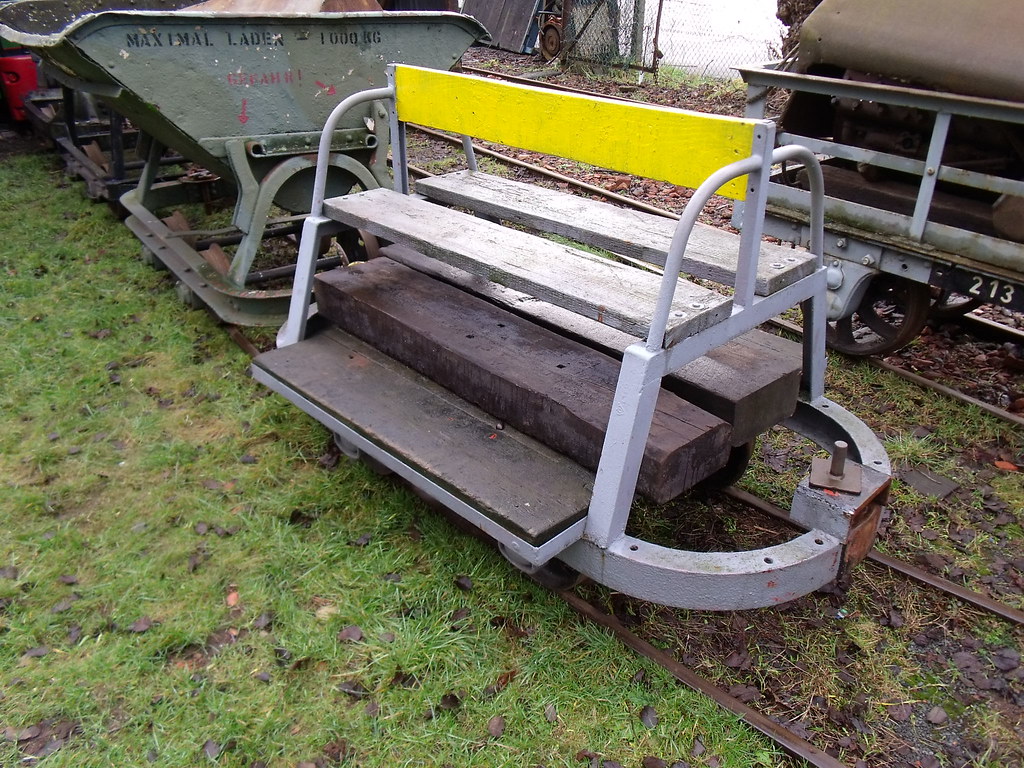
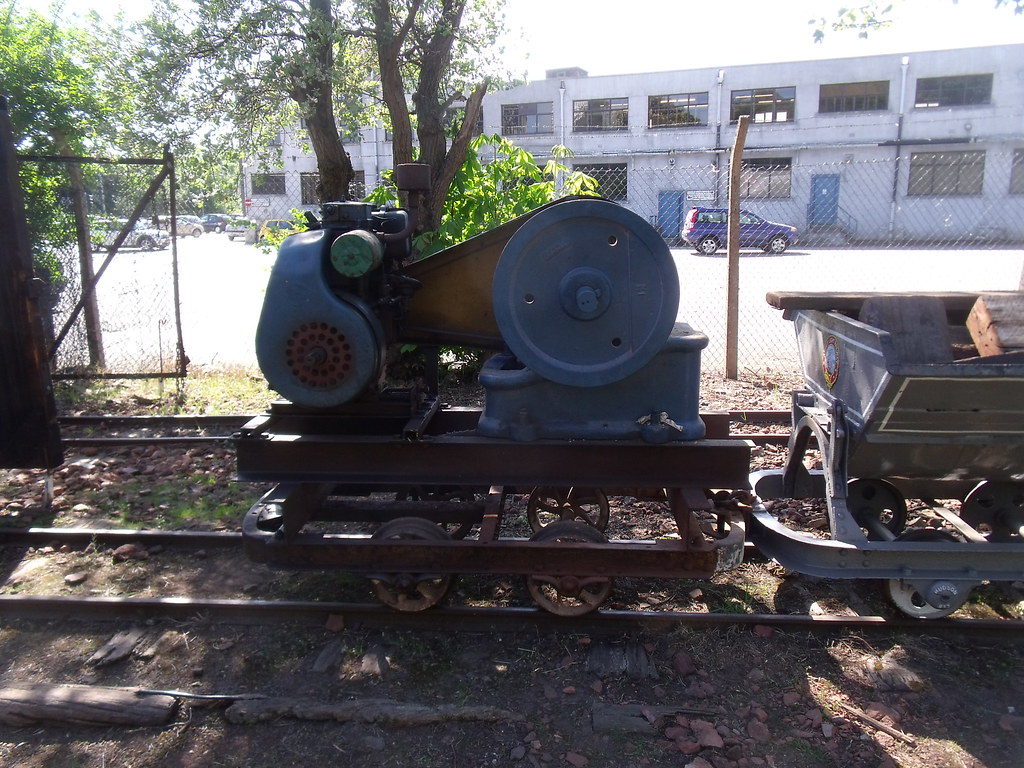
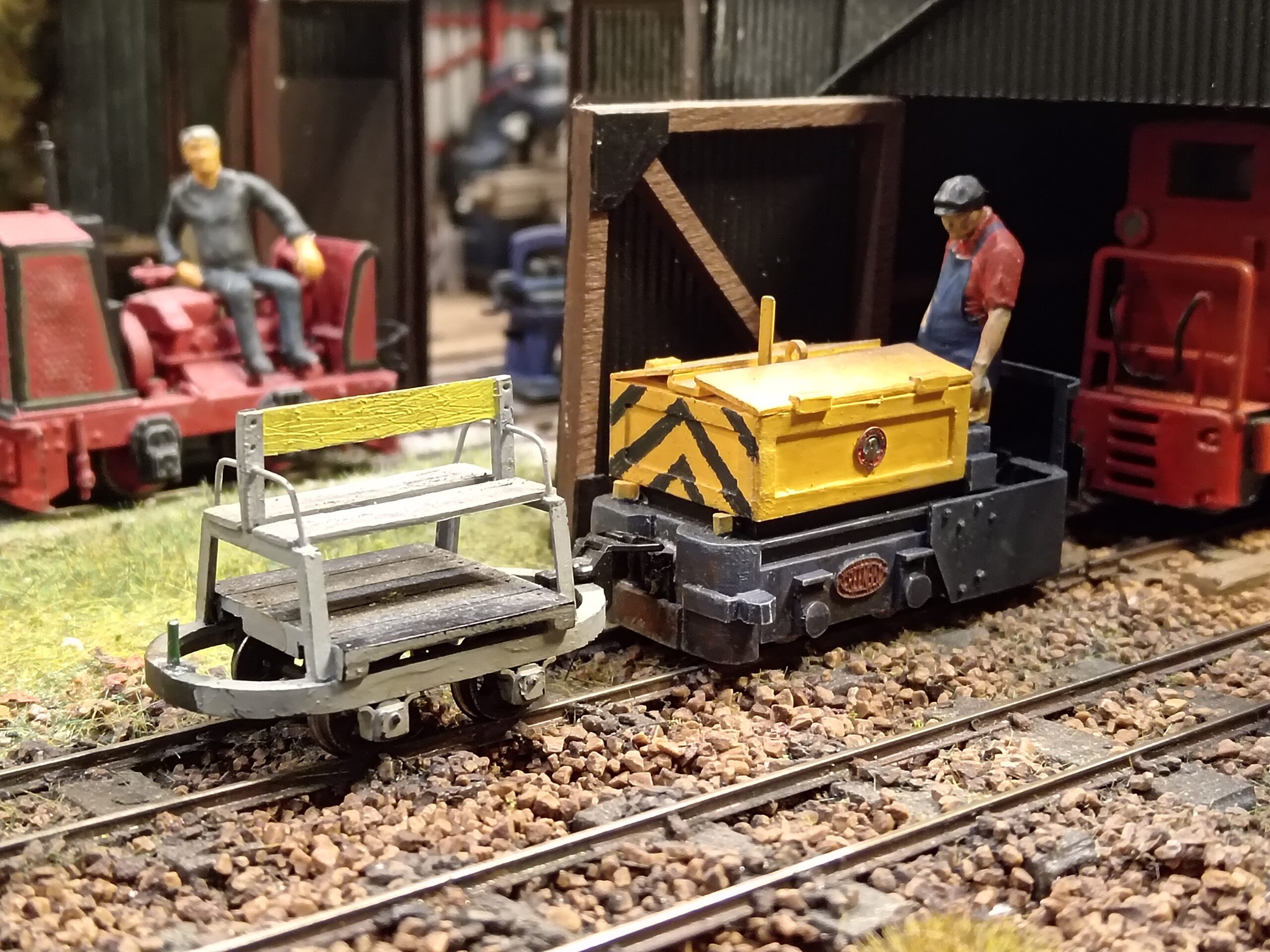
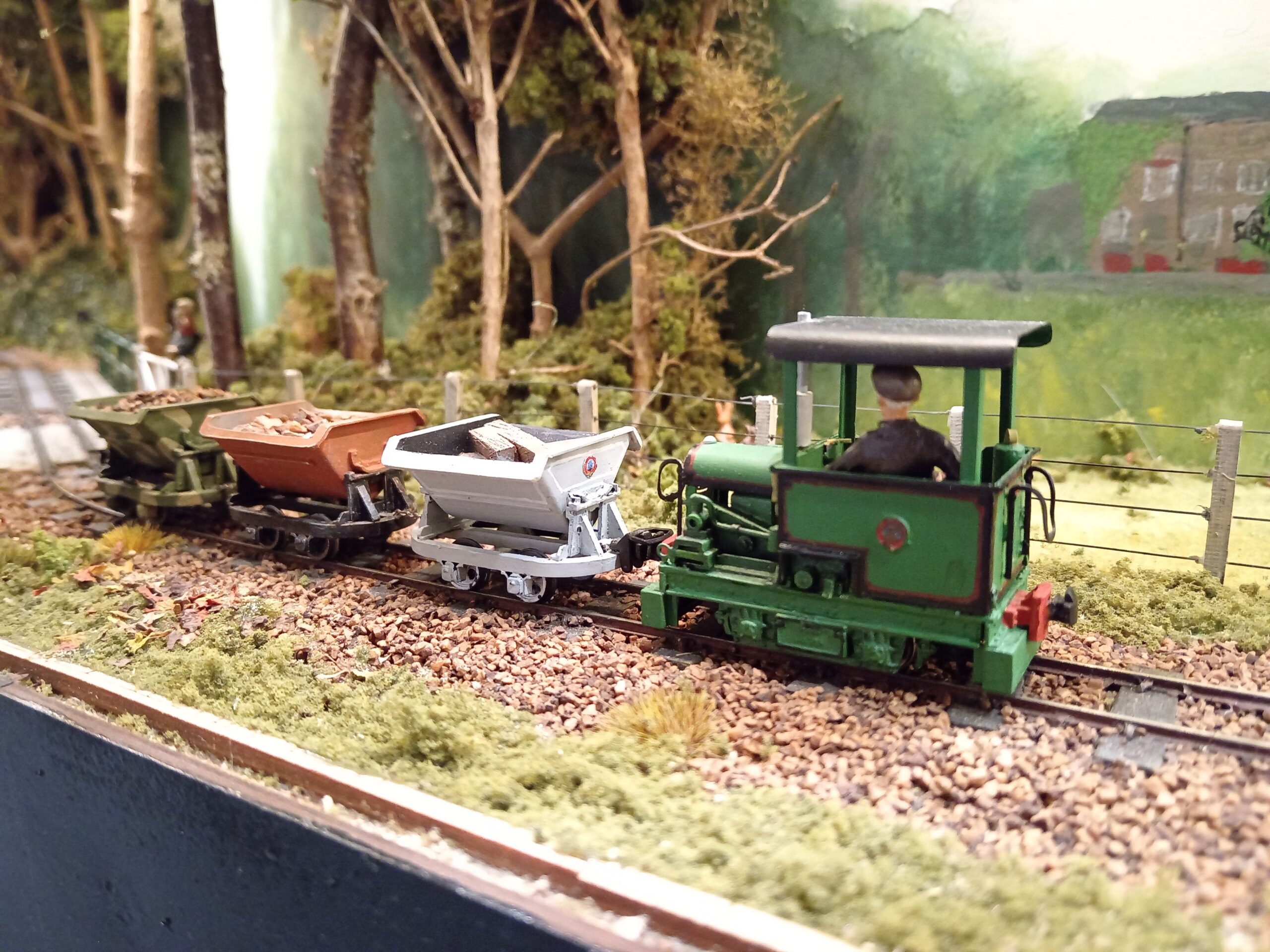
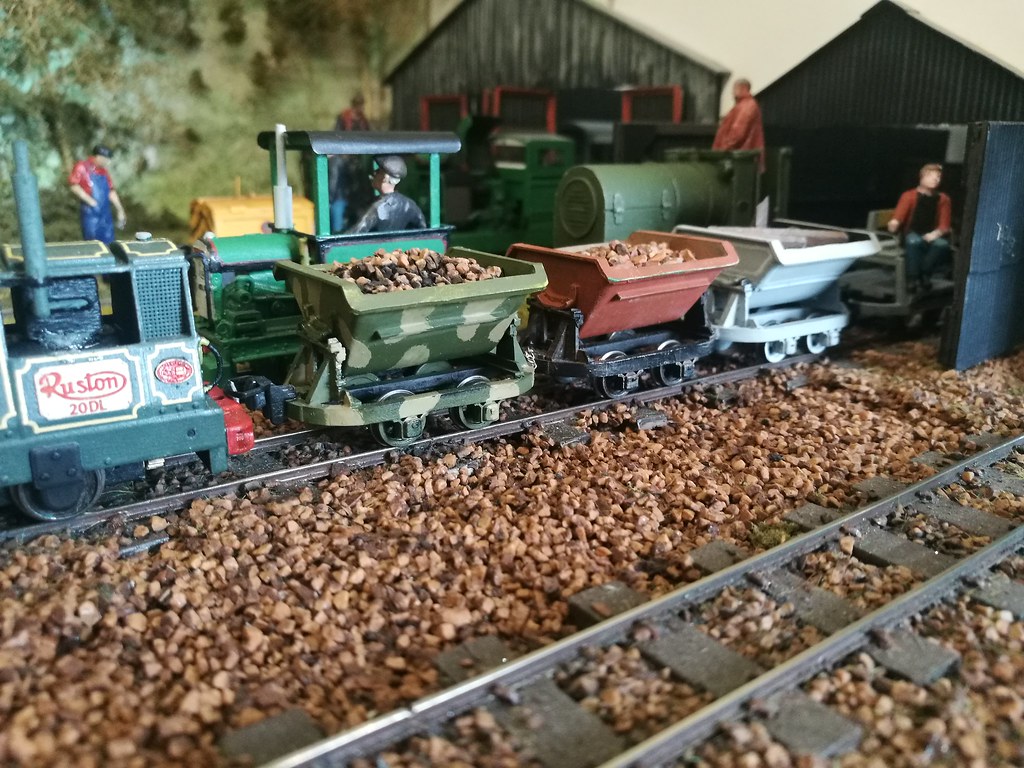
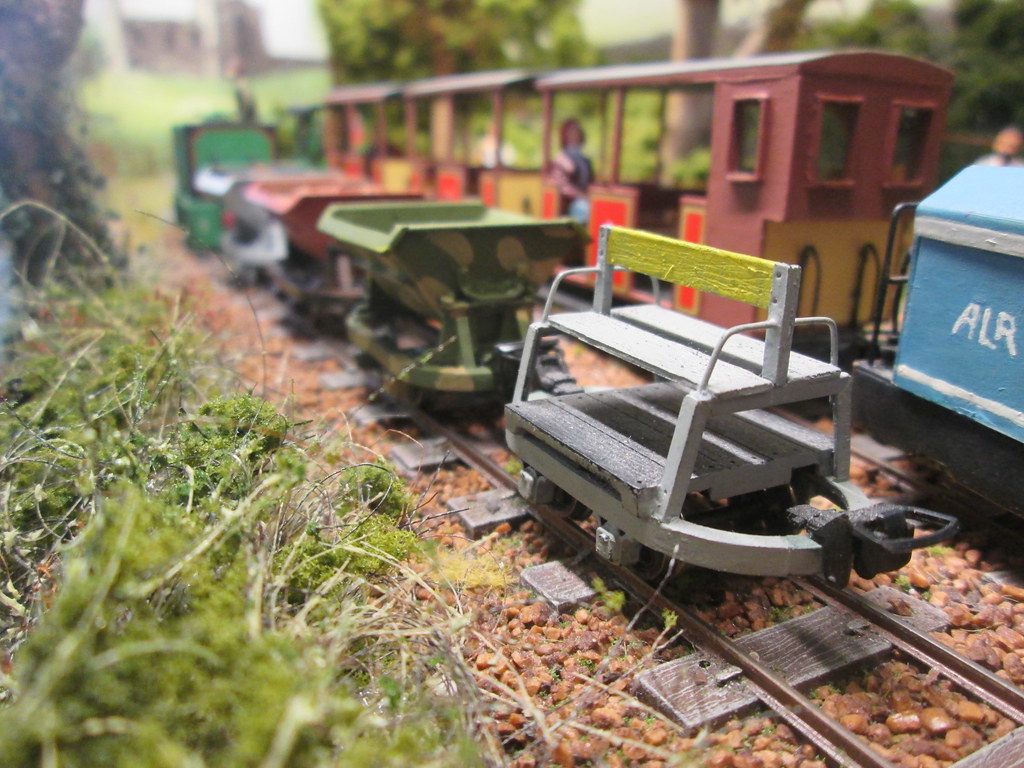
Notes on the prototype: The ubiquitous V-skip wagon could be found in many industries worldwide. The ALR used it’s skip wagons mostly for the bricks that were crushed and used for ballast, for scrap metal collection or loaded with useful pieces of wood. In addition to the ones retaining their skip bodies, there was one with a longitudinal bench in it’s place which was built as one of the first items of rolling stock for the railway, both prototype and model. Additionally, another skip chassis had the crusher mounted on it, another for the compressor and another for the generator (see ‘shed dwellers’). The skips have carried various liveries. Initially one was painted industrial orange with ‘Loweco’ (Peter Lowe’s trading name for various engineering exploits) on the ends. This gave way to various military style camouflage liveries. In the 00’s when we aimed to take a loco to the Narrow Gauge North railway exhibition in Leeds every year. One year we were without a big enough trailer to move a loco, so I painted up one of the skip wagons in ‘works grey’ with white lining and we took that to the show on a smaller trailer instead. Another skip was painted in this livery a few years later.
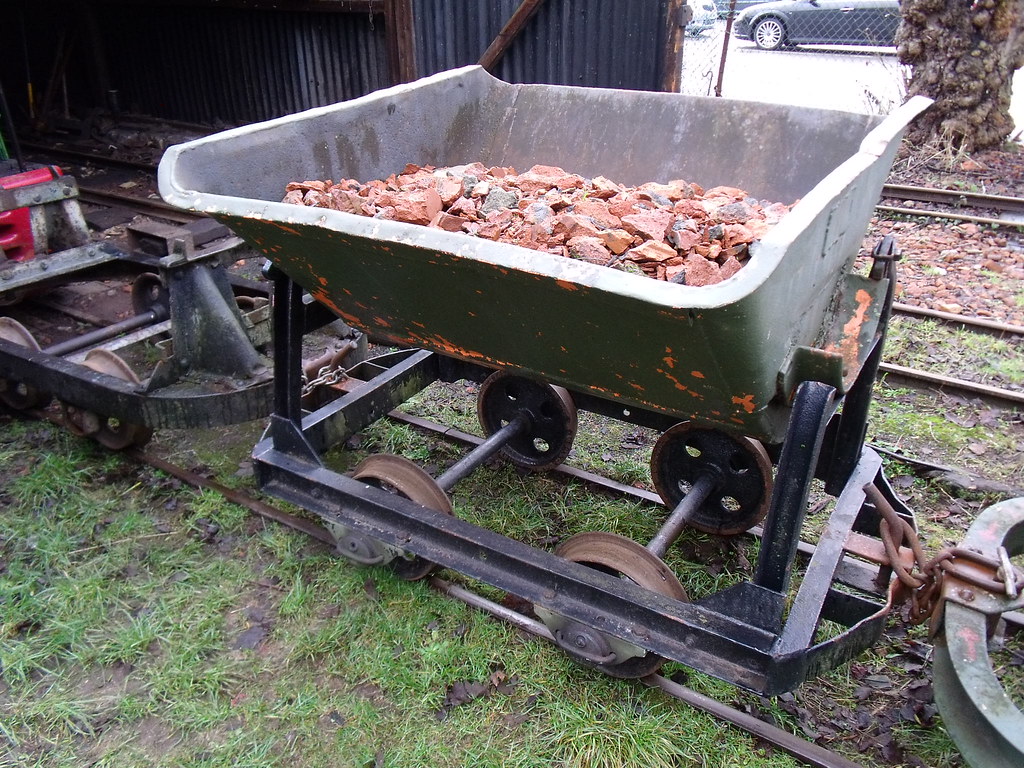
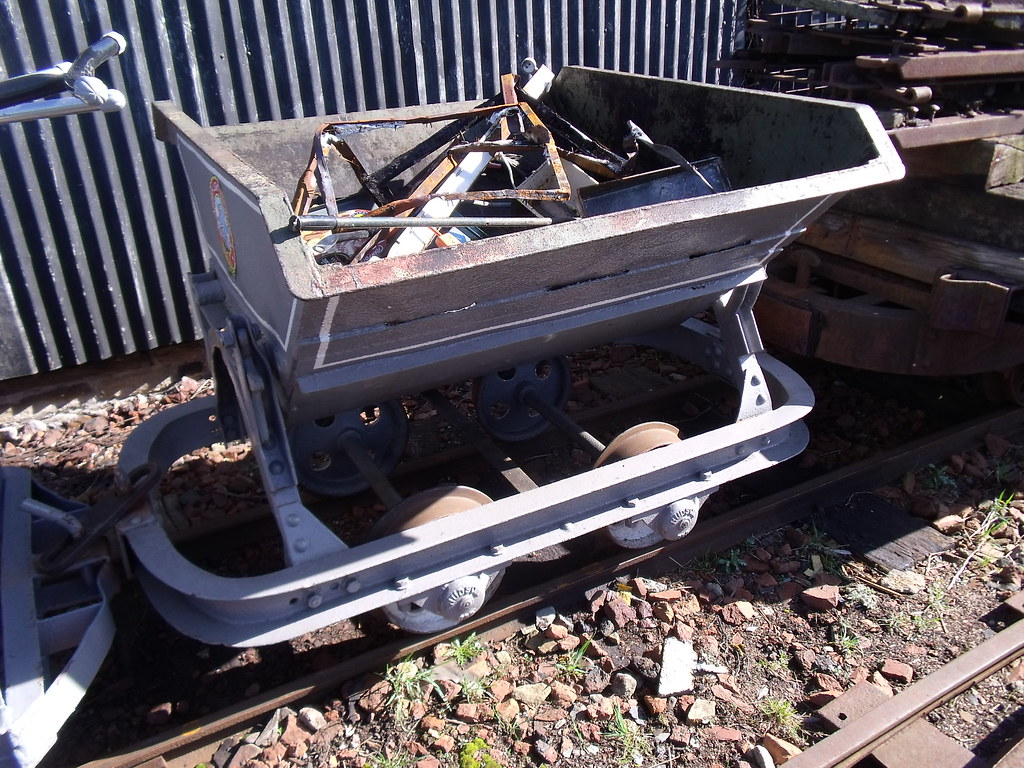
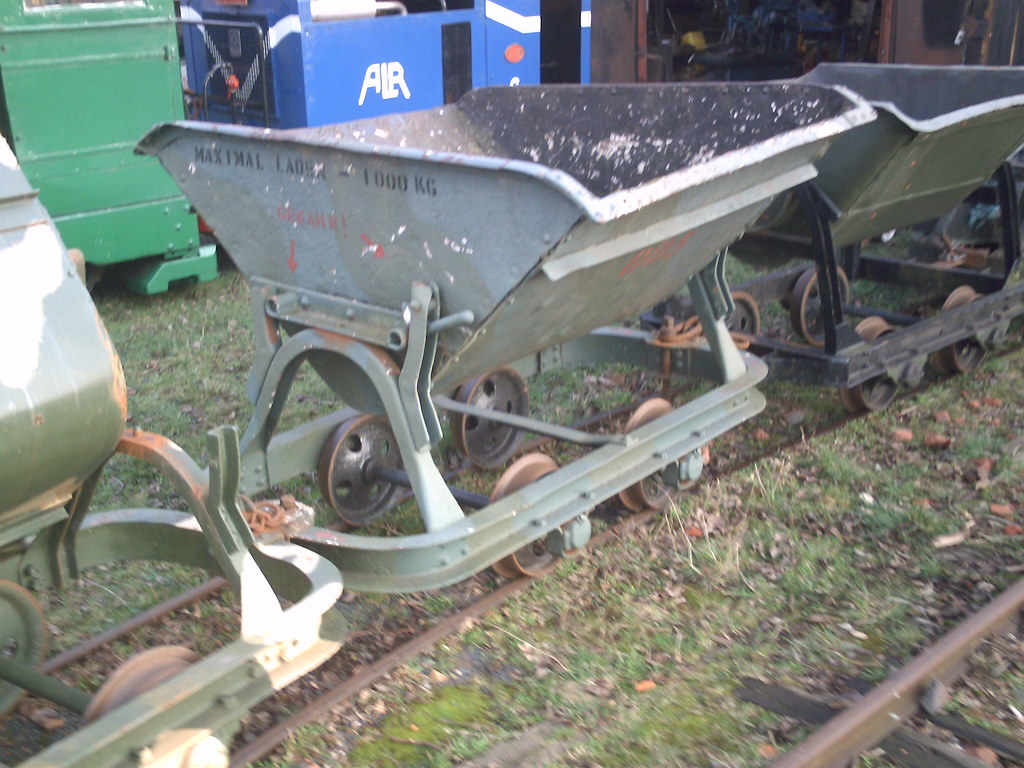
Notes on the model: The skip-based wagons all use the chassis from the KBscale kit. To try and build some variation into them some of their bodies are modified a bit. I do intend to one day create more accurate representations of the skip wagons, as even the KBscale kit is over scale.
The slate waggon
Builder: Ffestiniog Railway
Works number/year built:
Previous bases: Ffestiniog Railway; ? Military target range; ?; Abbey Light Railway; Welsh Highland Heritage Railway.
Notes on the prototype: The Ffestiniog railway had hundreds of this type of 2 ton slate waggon for transporting slate from the quarries surrounding Blaenau Ffestiniog to the port at Porthmadog. Famously the loaded wagons were run down the constantly graded line by gravity, with horses pulling the empties back up the hill. This is one such wagon, which after it’s career on the Ffestiniog found itself as a mobile target at a military shooting range. The damage from gunfire is still evident, with several holes through the corner posts. It was a bit of a liability at the Abbey Light Railway; being 1’11.5” gauge rather than the ALR’s 2’ (or thereabouts) it quite often derailed and wasn’t at all compatible with the wagon turntable. It’s buffers are also at a different height to everything else, and it was quite common for it to ride over the buffers of adjacent wagons and again derail. Eventually it was loaned permanently to the Welsh Highland Heritage Railway (a few years before the closure of the ALR) and placed on display in their museum at Gelert’s Farm.
Notes on the model: Originally a Langley brass kit for a 3ton slate waggon was used to represent our slate wagon. I later replaced this with a 3D printed accurate model of the 2t unbraked wagon we had, which continues to serve on the layout.