Coaches
Builder: Hudson / Abbey Light Railway
Works number/year built:
Previous bases: RAF Fauld; (some) Ffestiniog railway; Abbey Light Railway (converted to coaches); North Ings farm museum.
Notes on the prototype:
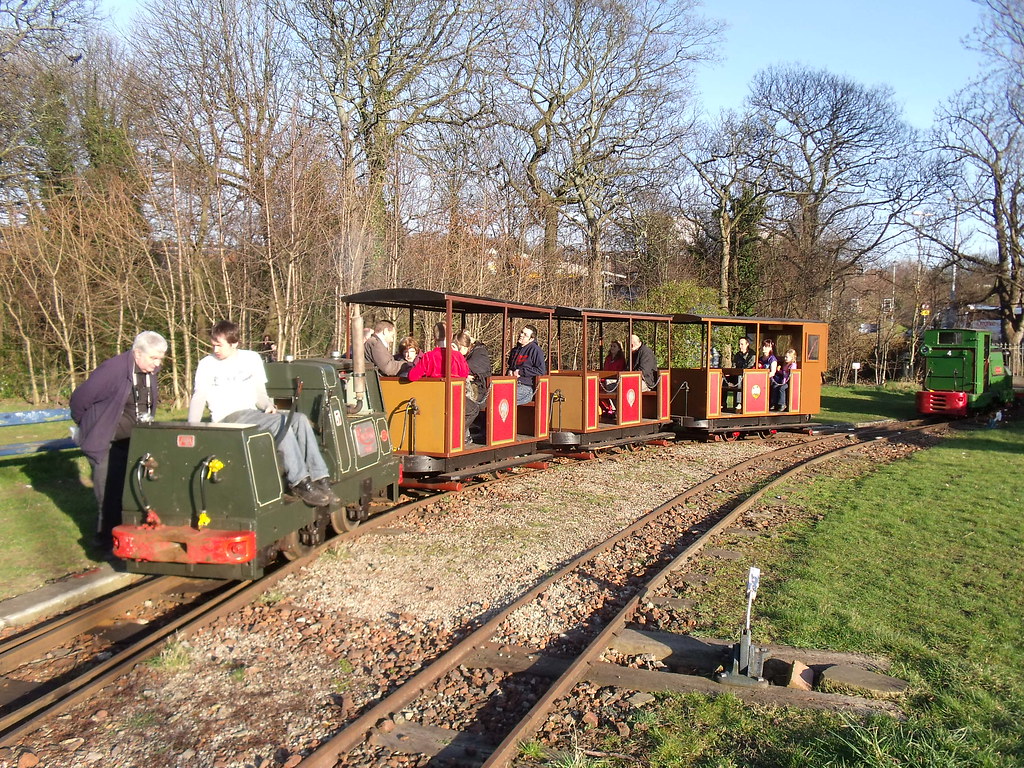
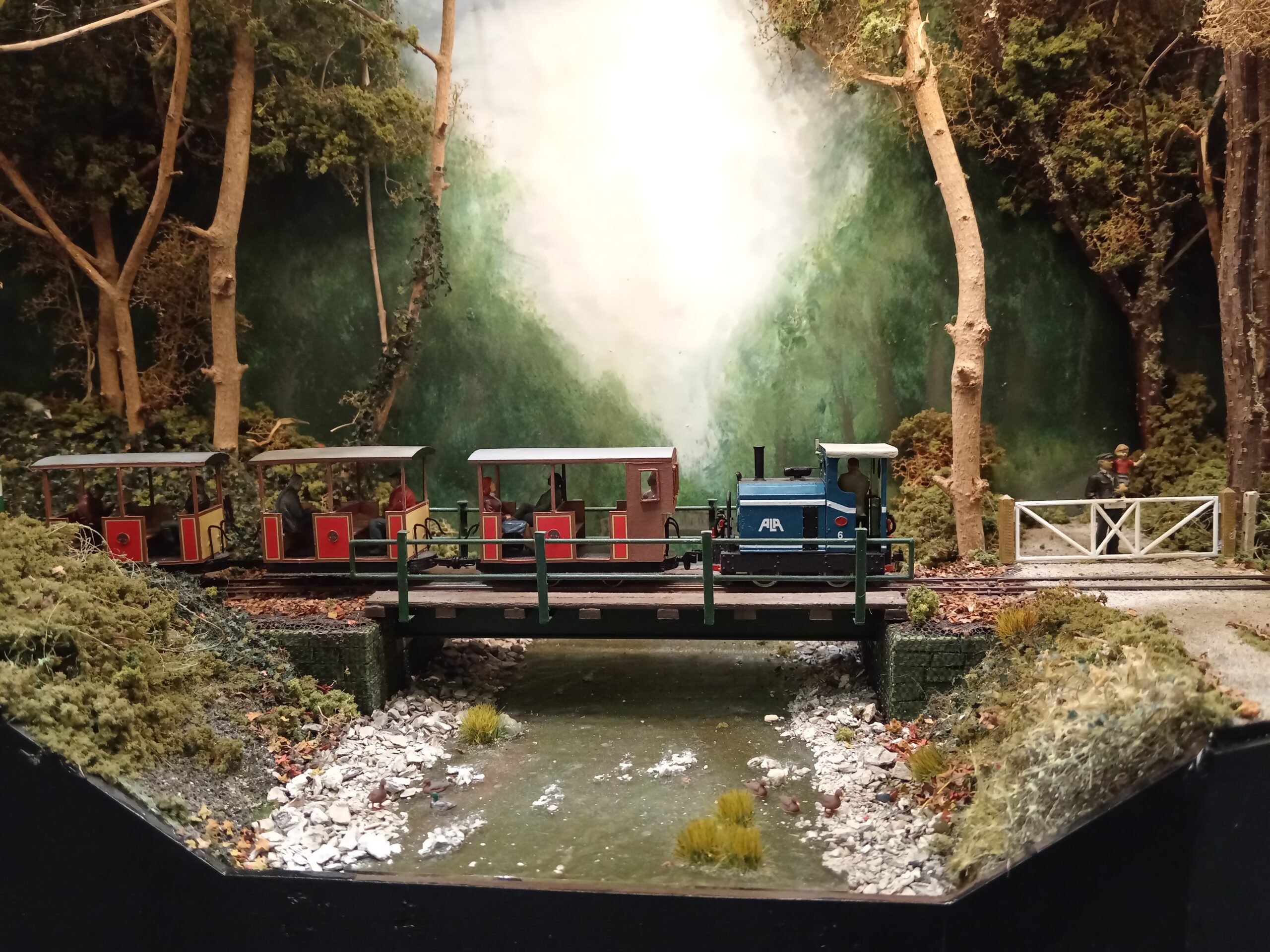
The coaches started life as ammunition wagons, built by Hudson in Leeds and used at RAF Fauld. The first one, the brake coach, was converted to in Peter’s garage for the start of passenger services on the ALR, with the other two following in subsequent years. The coach bodies were built of angle iron frames infilled with wooden panels and seats. As built the wagons had buffing plates and chains as couplings. This was replaced by a pivoting arm with integrated buffing plate and coupling bar, which better suited the slot and pin couplings on the locos. The coupling bars between the coaches were bolted in place to eliminate the possibility of accidental uncoupling. They were fitted with twin pipe air brakes and semi-permanently coupled (requiring a couple of spanners to separate). The brake compartment was originally open on all sides but ended up being panelled in on the coach end and none platform side, with a perspex screen between the guards and passenger compartments. The trio ran like this for most of the lifespan of the railway, with little in the way of modification.
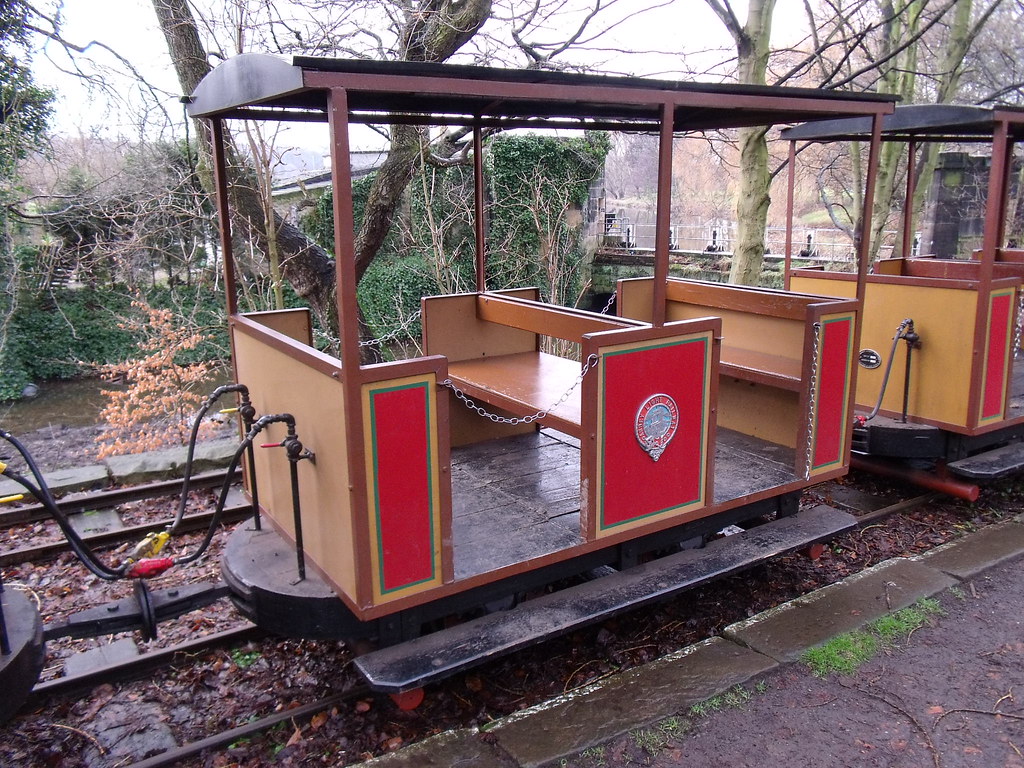
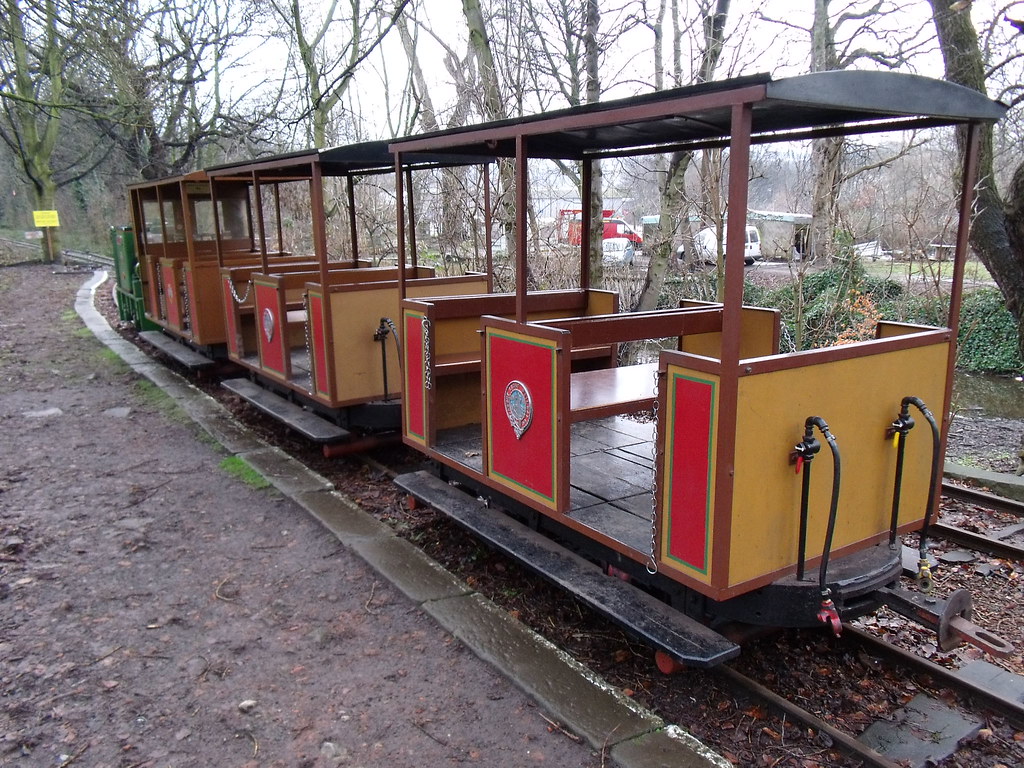
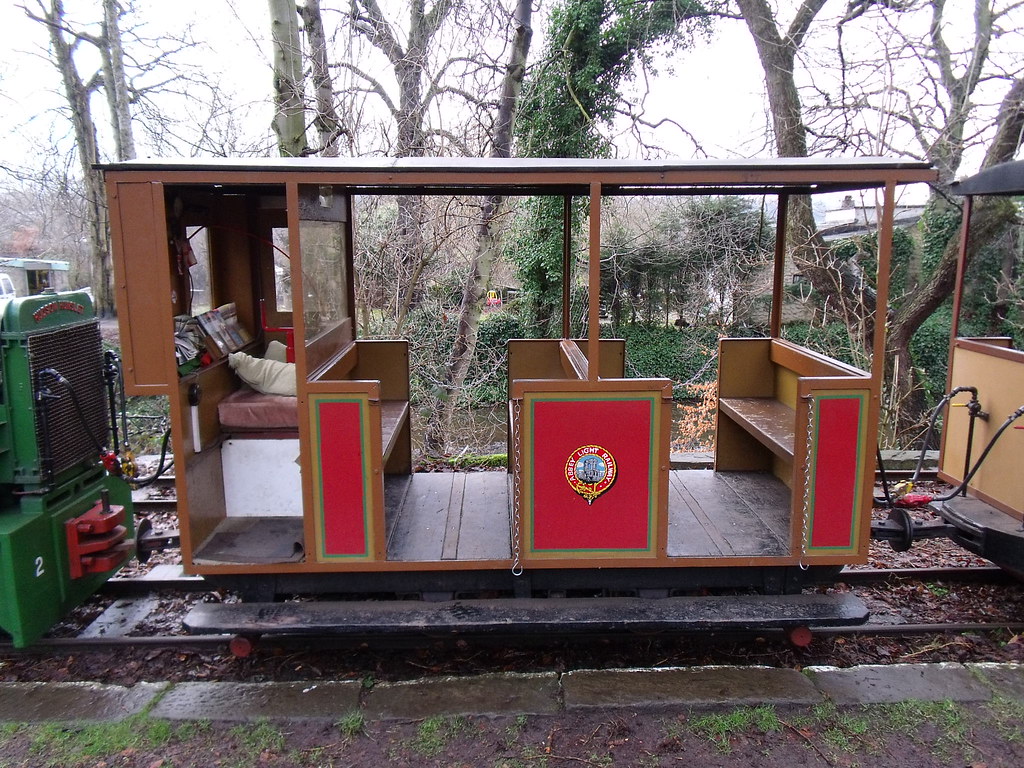
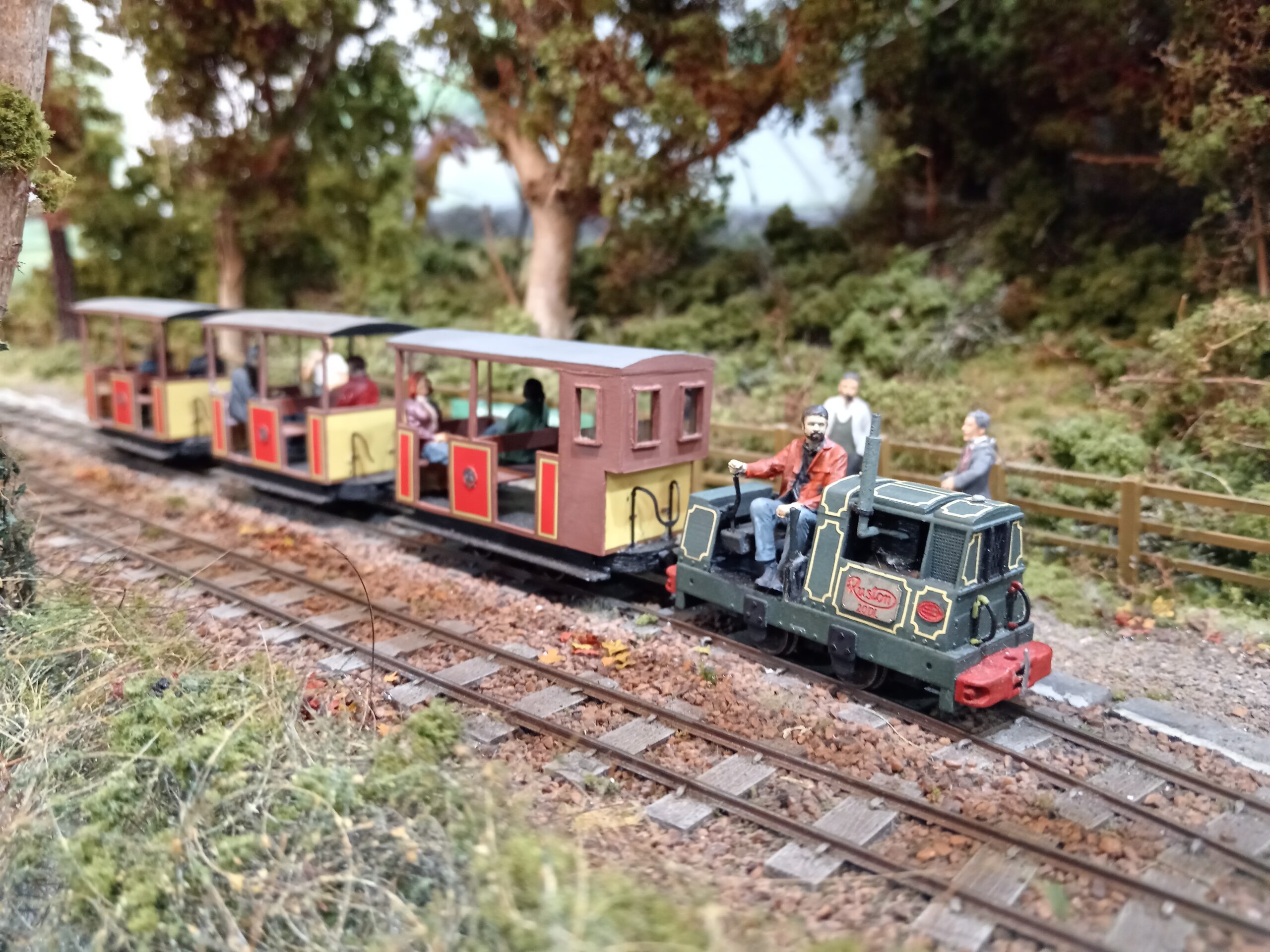
Notes on the model: The wagon frames for all the Fauld wagons on the layout, including the coaches, are 3D printed from my own CAD design. They were intended to use Kaydee knuckle couplers , brass bearings and KBscale/Roy Link wheelsets, which scale out as the correct diameter. I decided against using Kaydee couplers generally on the layout as the draft box required for them to pivot correctly is hard to conceal on many of the locos and wagons, but they remained on the intermediate couplings between the coaches. Later I glued them together to prevent the coaches accidentally uncoupling on the board joints, although this prevented them moving independently and caused derailments elsewhere. I finally replaced the Kaydee couplings with magnetic couplings I designed to look like the real coupling arms, which would very nicely. They have standard OO9 couplings on the outer ends of the rake. Applying the livery of brown framework with ochre borders, green lining and red panels neatly was a concern when I built them. I overcame this by drawing the sides and ends to scale in CAD and adding colour to it in a graphics package, then asking a favour from our factory at PECO to print it onto plasticard using the UV printer that normally applies the livery to N and OO9 wagons. I carefully cut around these and made up the bodies with plasticard seats and touched up the edges of the plasticard and interior with colours to match the print. The curved roofs were 3D printed by Chris Ward for consistency. The air brake pipes are custom brass etchings made by Narrow Planet from my design. Some of the locos are fitted with the same. Originally they were fitted with a couple of whitemetal passenger figures which I have replaced with finer 3D printed figures from Modelu.
The model coaches continue to run well, but the plastic bodies are becoming quite delicate. More than once I have had to carefully rebuild the roofs on them. I have plans to replace them with more robust brass versions in the future. I’d also like to experiment with air brake pipes that couple up magnetically.
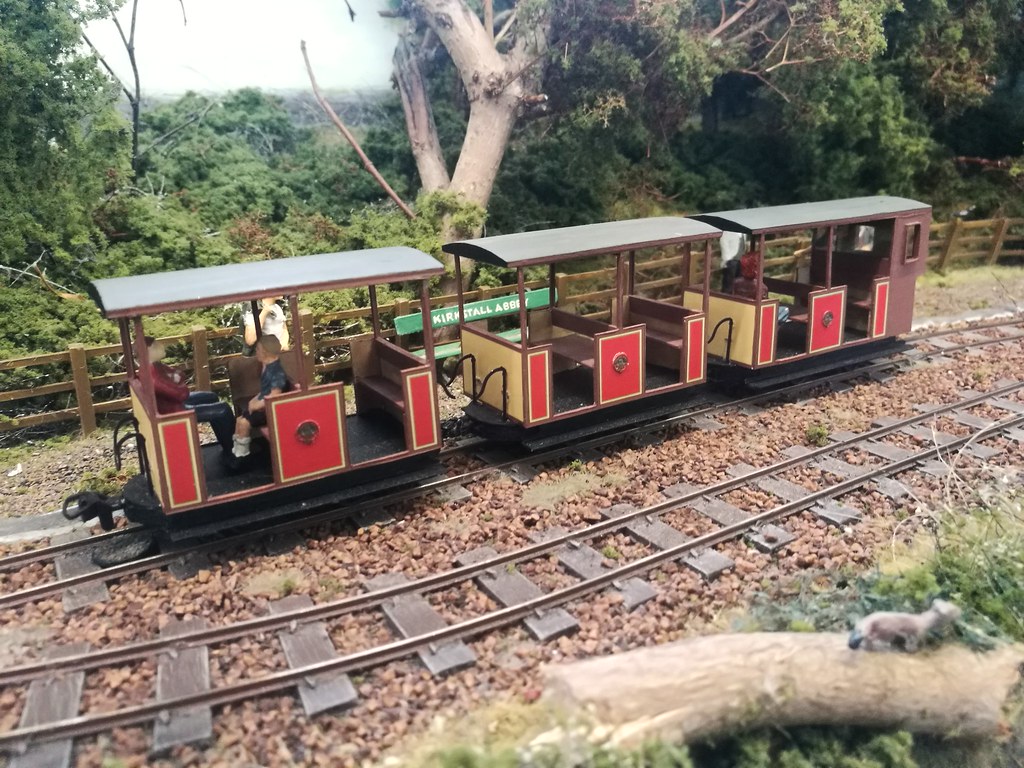
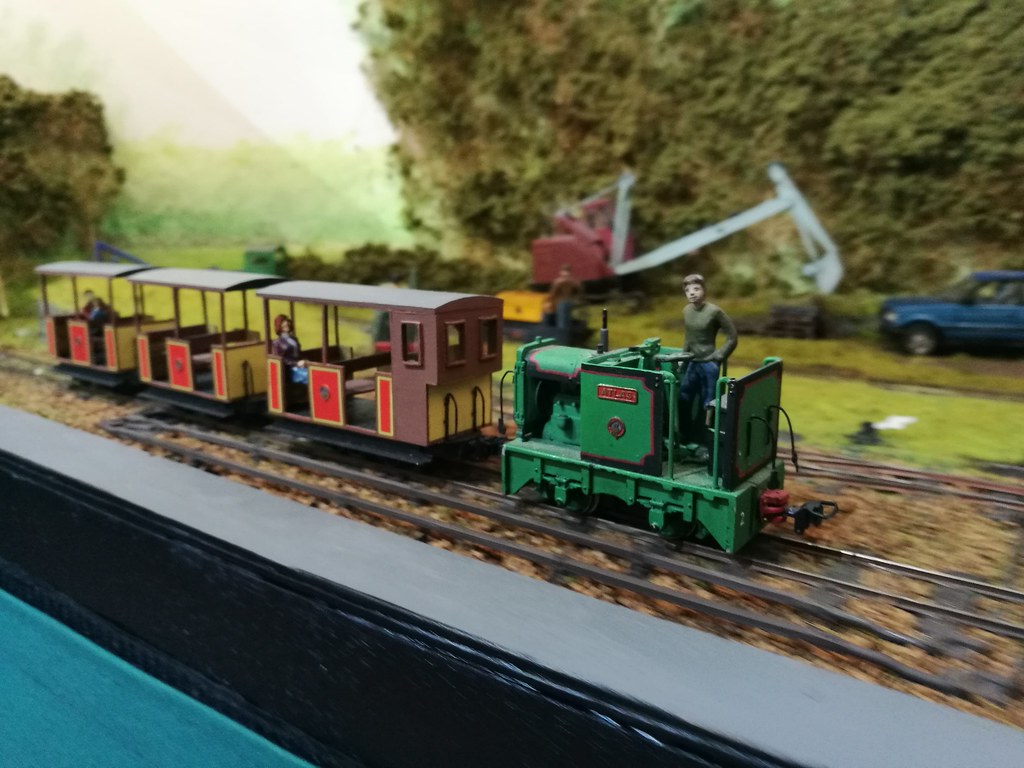
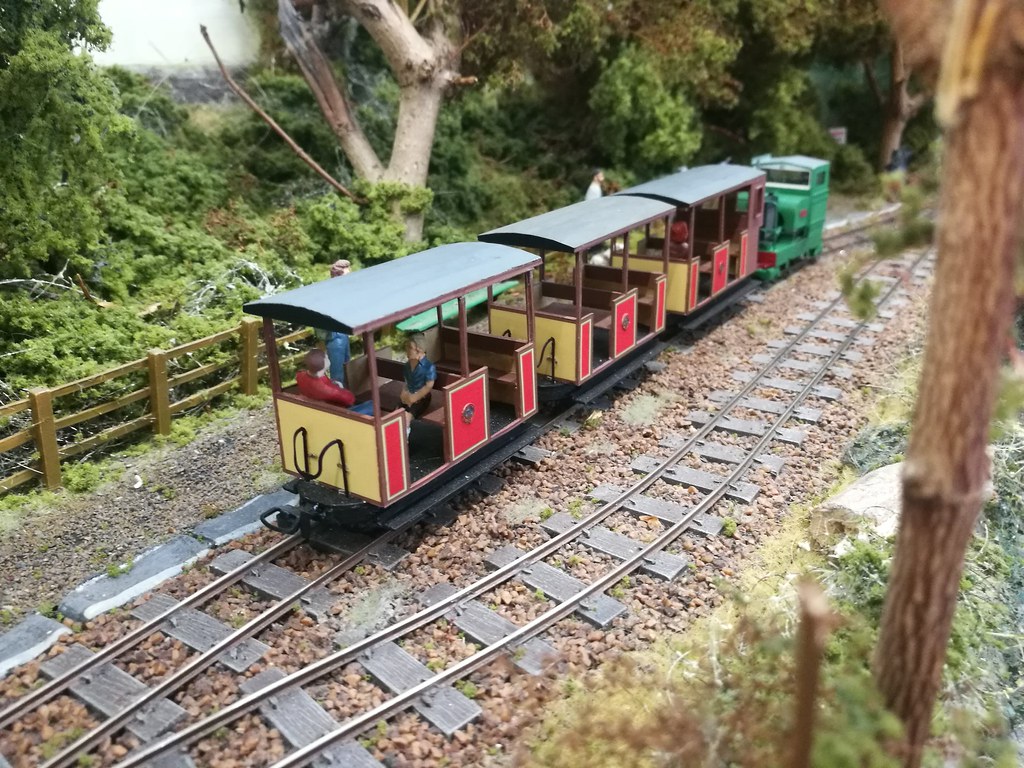
The (fictional) backup coaches
Builder: Hudson/ALR and Motor Rail/ALR
Notes on the prototype: There was no plans for any further coaches on the ALR, these are purely hypothetical.
Notes on the model: At one point I was planning on building another layout that would depict a fictional terminus of a ‘might have been’ extended Abbey Light Railway. I decided that for the longer run another set of coaches would have been required, but also thought it would be sensible to have a back up coach rake in case of a disaster involving the original three.